Raw material intake and batching automation program
Automation of intake, storage and dosing workflows with lot validation, recipe enforcement and digital batch records integrated to plant reporting.
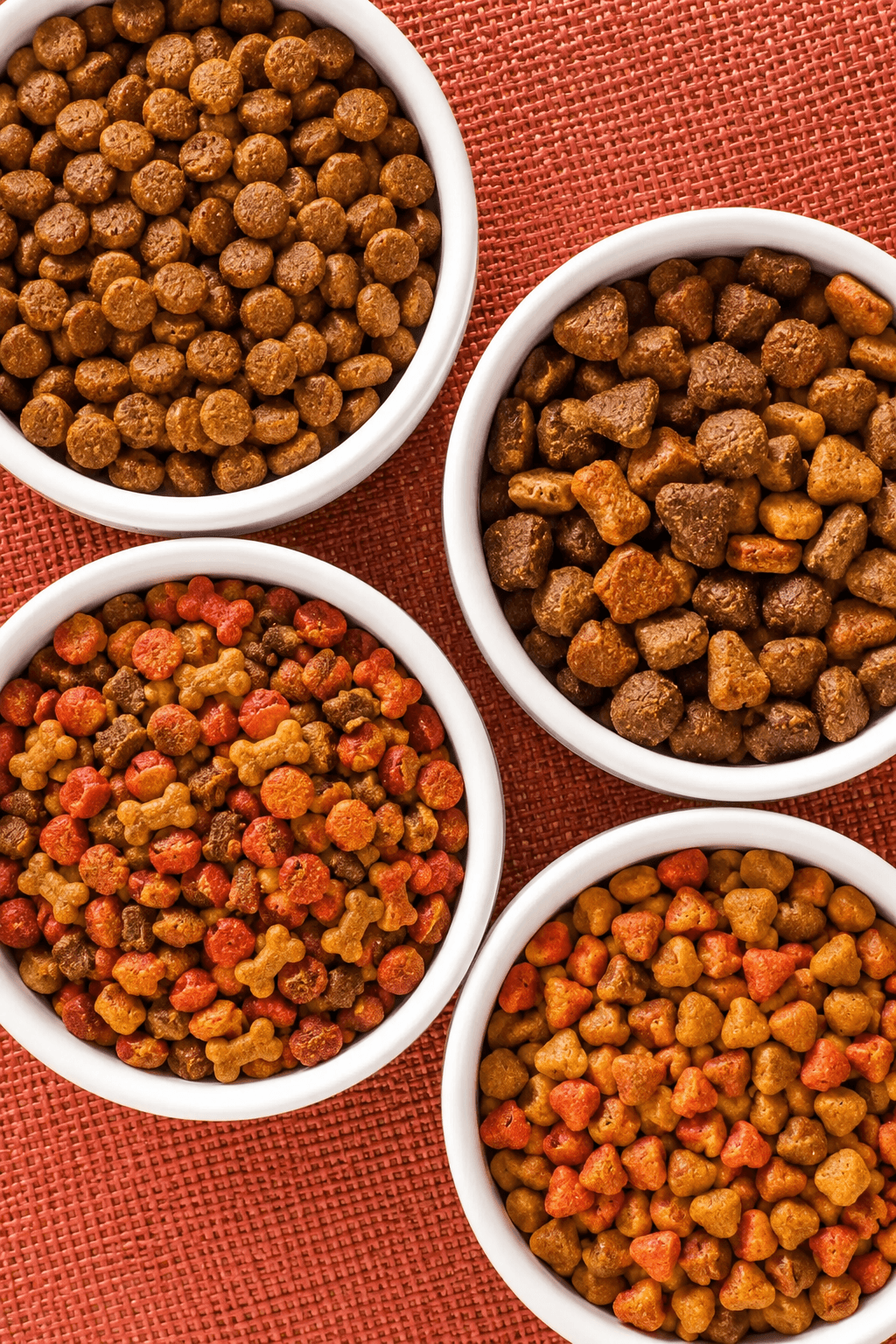
Metromotion Controls automates pet food plants across Melbourne and Victoria, covering raw material handling, batching, extrusion, packaging integration and traceability.
Pet food manufacturing brings together raw material variability, batching, thermal processing, packaging and traceability. Metromotion Controls designs controls for recipe enforcement, intake, dosing, process stability, quality records and production reporting.
Protein meals, grains, oils and micronutrients have different handling needs and quality constraints. Sites need dependable weighing, dosing and route validation to avoid formulation drift.
Process windows can shift with ingredient characteristics and upstream variation. Without coordinated control and feedback, product texture and nutritional targets can drift.
Process interruptions can destabilise packaging flow, while packaging stops can create upstream product handling issues. Integrated state management is needed to protect yield.
Pet food operations require rapid traceability for quality assurance and market response. Manual records are too slow for efficient containment and analysis.
We understand the process behind a pet food plant, from raw material intake and gravimetric dosing through mixing, extrusion, drying and coating, which lets us program recipe-driven control from the P&ID and a plant walkthrough rather than a long functional specification. We deploy raw material handling controls with validated routing, bin inventory visibility and weigh-scale integration to manage dosing accuracy. Ingredient identity checks and transfer confirmations are embedded into sequence logic to reduce operator error and formulation drift.
Batching and mixing strategies use parameter-governed recipe and phase control with alarmed tolerances and automated exception capture. For extrusion and drying stages, we integrate the measurements that govern texture and nutritional targets, including barrel temperature, pressure, screw speed and moisture, into trend-driven operational dashboards so process engineers can hold the window and recover quickly after a disturbance.
Our integration approach connects process assets with packaging lines through coordinated buffering logic, transfer permissives and state machines that support controlled recovery after disturbances. This reduces waste and minimises unstable restarts.
For traceability, we link ingredient receipt data, batch execution records, in-process quality checks and packaging identifiers within a common data architecture. The result is faster recall analysis, clearer supplier performance insight and stronger quality governance.
Automation of intake, storage and dosing workflows with lot validation, recipe enforcement and digital batch records integrated to plant reporting.
Control strategy upgrade for extruder feed, thermal control and downstream handling with enhanced alarms, trend tools and startup sequence reliability.
Unified line-state model connecting dryers, coaters, conveyors and packaging equipment to reduce stop/start losses and improve throughput stability.
Data model and interface development linking ingredient lots to finished goods labels and pallet IDs for compliance and customer reporting requirements.
Pet food sites generally combine continuous and batch operations. We align platform selection to hygiene, throughput and reporting requirements while keeping support practical for maintenance teams.
PLC and visualisation: Rockwell, Siemens and Ignition-based supervisory systems.
Material handling controls: weigh systems, load cells, VFDs and pneumatic transfer instrumentation.
Protocol stack: EtherNet/IP, Profinet, Modbus TCP, OPC UA and secure remote support access.
Information systems: historian, SQL repositories and reporting integrations for quality and production teams.
We apply role-based recipe control, approved parameter ranges and change logging for every recipe revision. Operator workflows include confirmation checkpoints so formulation-critical settings cannot be altered without traceable authorisation.
In many cases, yes. We often improve performance through software refactoring, better signal conditioning, additional instrumentation and operator guidance while retaining suitable field hardware and minimising capital disruption.
An integrated architecture lets lot-to-pack trace queries run directly against captured lot and batch records rather than reconstructing them by hand, which is usually the main driver of slow investigations. Actual response time depends on lot granularity, instrumentation quality and data discipline, which we address during design and commissioning.
Both. Metromotion Controls programs pet food plants from the P&ID and a walkthrough because we understand the process behind the equipment. That means working with the variables that actually move product quality and yield, including gravimetric dosing accuracy, mixer homogeneity, extruder barrel temperature, pressure and screw speed, and dryer moisture and retention, then holding those windows under real ingredient variability rather than treating each machine as an isolated controller.
Pet food raw materials automation covering batching, handling and production control requirements.
ISA-88 recipe and batch control, extrusion and rendering process control, critical control points and AS 5812, OEE and traceability for pet food lines.
PLC programming, troubleshooting, commissioning and legacy migration for Melbourne production sites.
Live OEE, downtime tracking and production dashboards read straight from the PLCs.
OEE, reports, quality, CIP, maintenance and energy data from the team that builds and programs the lines.
Connect OEM equipment, production lines, line controls, data systems and site standards into one operating environment.
Electrical design, control cabinet upgrades and panel-build support for industrial projects.
Checkweigher, metal detector, batch and lab data with lot genealogy, from the systems that run the line.
Live line status, actual rates, stops and CIP in front of the scheduler, for re-planning in real time.
Tell us the site change, upgrade or support requirement. We'll review the scope, timing and technical constraints and respond with a clear next step.