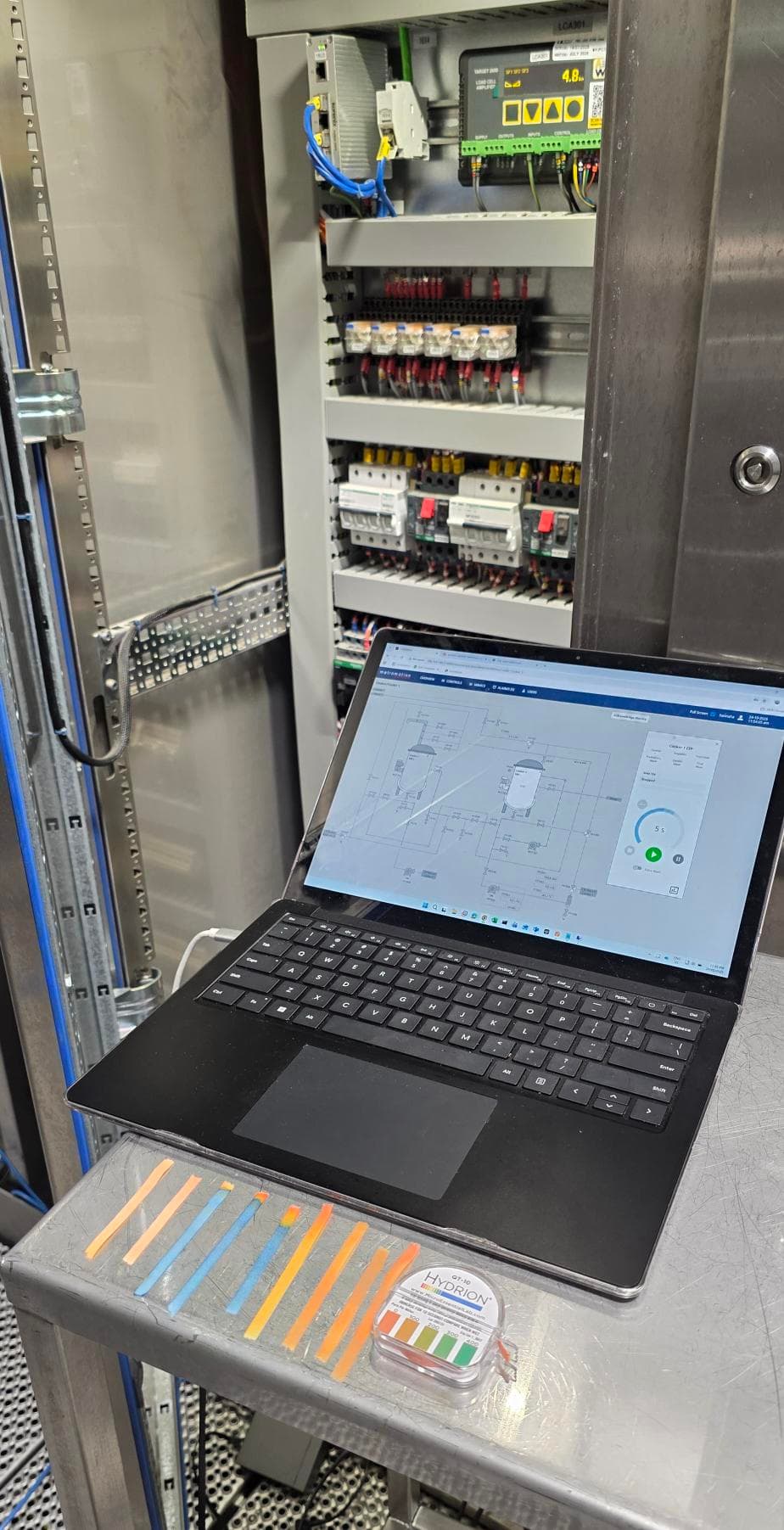
Do you provide PLC programming in Melbourne for existing production lines?
Yes. Metromotion Controls provides PLC programming in Melbourne for existing production lines, brownfield upgrades, OEM equipment integration, fault recovery and legacy migration. We plan changes around site access, backups, testing evidence and production windows so the work can be commissioned with controlled risk.
Do you provide SCADA programming in Melbourne?
Yes. We provide SCADA programming in Melbourne for production sites using Ignition, FactoryTalk View, WinCC, Citect, AVEVA and mixed legacy environments. Work can include new screens, alarm and trend improvements, historian tags, database integration, reporting, remote access and controlled changes to existing systems.
Can you help with HMI programming and operator screen upgrades?
Yes. We design and modify HMI screens for running plants, including navigation, sequence status, alarms, diagnostics, manual controls and role-based access. The aim is to make the screen useful under production pressure and easy to diagnose.
Can you modify PLC code without stopping production?
Some PLC changes can be prepared, reviewed and downloaded with little or no production interruption, while others need a planned shutdown. We confirm the controller platform, process risk, available test method and rollback plan before recommending how the change should be made.
Which PLC brands do you support?
We work across Rockwell Allen-Bradley, Siemens, Omron, Schneider and mixed legacy PLC environments. We also support connected SCADA and HMI platforms including Ignition, FactoryTalk View, WinCC, Citect and AVEVA.
What is the benefit of standardised PLC code libraries?
Standard libraries reduce defects, speed up new projects and make troubleshooting predictable. They also simplify training because electricians and engineers see the same control patterns across different machines and lines.
Do you support remote SCADA development and testing?
Yes. We can develop remotely using secured VPN and staging servers, then complete FAT and SAT with your team. This model is useful for interstate sites and allows earlier progress before site access is available.
Are you an Ignition SCADA integrator in Melbourne?
Yes. Metromotion Controls is an Ignition Gold Certified System Integrator based in Melbourne. We deliver Ignition SCADA, Perspective, historian, database and reporting projects for manufacturing sites.
Can you support legacy PLC migration in Australia?
Yes. We plan legacy PLC and SCADA migrations around production continuity, source-code review, staged testing, FAT scripts, I/O simulation, cutover run sheets and fallback plans.
Can you improve an HMI without replacing the whole system?
In many cases yes. We can redesign key screens, rationalise alarms, improve navigation and add better diagnostics while retaining your existing SCADA platform, provided the underlying infrastructure remains supported.