Platforms and vendors
- Rockwell Allen-Bradley
- Siemens
- Ignition
- AVEVA Wonderware
- Citect SCADA
- Schneider
- Omron
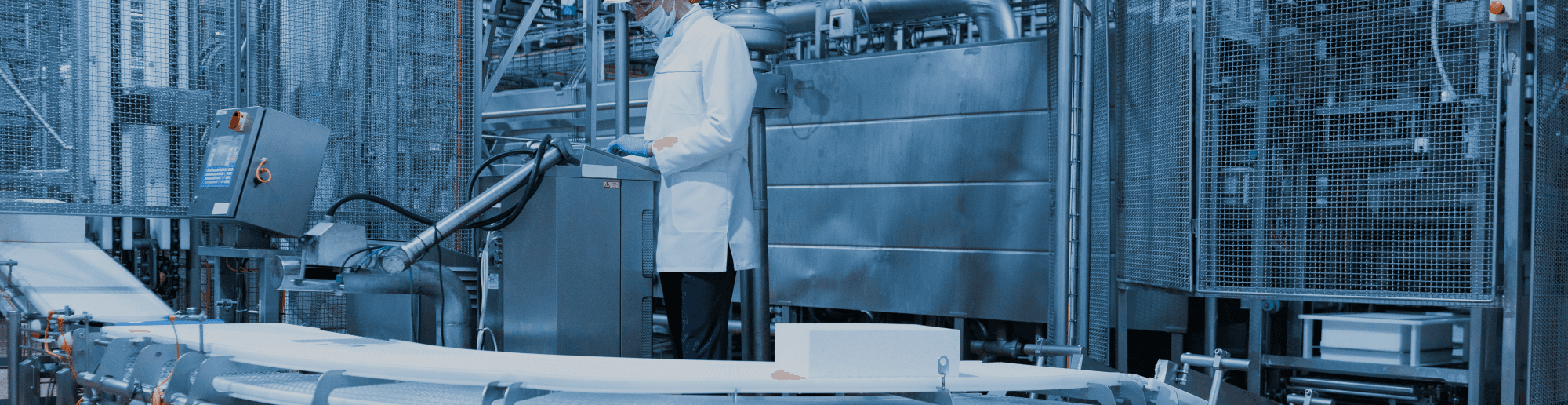
Metromotion Controls plans automation upgrades, retrofits and legacy PLC migration around the highest-impact wins for uptime and throughput while clearing obsolescence, staged by our Melbourne control systems team for food and beverage sites across Victoria and Australia.
A good upgrade targets the changes that return the most uptime and throughput, and clears obsolescence along the way. Metromotion Controls plans legacy PLC, SCADA, drive, HMI and server migrations around asset criticality, shutdown windows, test evidence and rollback points, so each stage of spend lands where the operational return is highest.
Automation upgrades and retrofits need careful planning because most sites cannot stop production for long periods. We start with asset criticality, obsolescence risk and dependency mapping across PLCs, drives, HMI nodes and network infrastructure. From there we build phased upgrade plans that align with outages, parts availability and operating constraints. Detailed run sheets define pre-checks, decision gates, rollback triggers and communication responsibilities so each change window is controlled.
Retrofit projects blend engineering, site coordination and practical support after go-live. We deliver migration design, code conversion, simulation, FAT, SAT and onsite commissioning assistance, then remain available for optimisation once operators are using the new system. Documentation is updated in parallel, including electrical drawings, software backups, alarm lists, network maps and operator guides. Where training is required, we run sessions for electricians, supervisors and maintenance planners so the new platform is understood across shifts. A common scenario is replacing an obsolete SCADA layer while retaining field devices and MCC infrastructure to meet budget limits. We sequence this work to preserve production visibility and avoid data gaps. Metromotion Controls also offers ongoing support contracts, preventative maintenance visits and remote troubleshooting to keep upgraded systems stable over time.
We rank items by operational return, looking at where uptime, throughput and maintenance gains are largest, alongside spare part availability and obsolescence. That lets a budget target the highest-impact wins first while still building toward a complete modernisation roadmap.
Often yes. We use staged cutovers, temporary interfaces and pre-tested migration packages to minimise downtime. The exact strategy depends on process constraints and shutdown windows available at your site.
Yes. We provide post-commissioning support, tuning, documentation updates and optional support contracts so your team has reliable assistance as the upgraded system beds in.
We rebuild the intent from the process rather than copying logic blindly. Reading the P&ID, walking the line and reviewing the existing program together shows us what each sequence, interlock and CIP step is really doing, including the undocumented tweaks operators rely on. The new code then reproduces the behaviour the plant expects, with modern diagnostics and a clean structure, so the upgrade is easier to maintain instead of carrying old assumptions forward.
PLC programming, troubleshooting, commissioning and legacy migration for Melbourne production sites.
Commissioning engineers, acceptance testing, loop checks, startup support and control system readiness audits across Australia.
PLC and SCADA fault finding, planned maintenance and production breakdown support for Melbourne and regional sites.
Machine automation, line integration, OEE data and controls upgrades for high-volume manufacturing sites.
Planning an upgrade without losing production on a live Australian manufacturing site.
New product line integration for FMCG and packaging operations.
Ignition Gold Certified System Integrator for Ignition SCADA, historian, reporting and MES functions.
When a variable speed drive saves energy, how to build the case and how to replace an ageing drive.
How to choose a control architecture for an Australian process plant, expansion or migration.
Upgrading SLC 500 and PLC-5 systems to CompactLogix and ControlLogix: routes, code conversion, HMIs and the Bulla churn case study.
Upgrading AVEVA Plant SCADA or Geo SCADA in place, or migrating to Ignition, with a staged cutover that keeps operators in control.
SLC 500 end-of-life upgrade to CompactLogix PLCs, I/O and HMIs for two ice cream churns, completed in a one-week shutdown.
Legacy boiler PLC programs migrated to CompactLogix for an OEM, verified through I/O testing and commissioned at end-customer sites.
Bulla's ice cream churns ran on Allen-Bradley SLC 500 PLCs and I/O that were approaching obsolescence, with spares getting harder to source. The churns are central to production, so a controller failure would have meant an unplanned stop on a core line rather than a peripheral inconvenience. Bulla chose to upgrade before that happened, replacing the SLC 500 controls on two churns with CompactLogix PLCs, I/O and new HMIs. Metromotion Controls delivered the SLC 500 upgrade as a hybrid migration: existing control logic was ported across rather than rewritten from scratch to keep the project cost-effective, then simplified and commented so the code would be easier to navigate and maintain going forward. The two churns are functionally identical but differ in some internal detail, so each line was engineered separately rather than treated as a single duplicate job. The upgrade also extended to the recipe management system, increasing the number of recipes it could store and bringing its logic in line with how the plant actually runs the churns day to day. The full migration, cutover and commissioning were completed within a single one-week shutdown window.
McCormick is one of the world's largest spice and flavouring manufacturers, with production facilities across Australia. When the team needed to migrate a critical Clean-In-Place system to a modern, maintainable platform, Metromotion Controls delivered a full migration to Ignition SCADA with integrated database, multi-terminal operator access, and a distributed control architecture spanning the facility. CIP systems are production-critical in any flavouring or seasoning environment, and the migration was planned and executed to maintain production continuity throughout.
Steamtech Engineering is a boiler OEM that installs across multiple end-customer sites, and its boiler automation ran on ageing legacy PLC programs that every new installation inherited. The task was a legacy PLC migration with a goal beyond any one site: the migrated program had to become a maintainable baseline suitable for repeat deployment, not a one-off conversion. Metromotion Controls migrated the legacy code base onto current Rockwell CompactLogix and PanelView platforms, verified the migrated logic against the field through structured I/O testing, and supported commissioning from the OEM workshop through to Steamtech end-customer sites. The result is a more consistent controls baseline across new installations, which is easier for Steamtech and its customers to support.
PLC programming, SCADA programming and HMI screen work that operators and maintenance teams can support.
Remote and onsite support for PLC, SCADA, HMI, OT network and electrical control issues.
FAT, SAT, loop checks, startup support and defect closeout before production handover.
Speak directly with an engineer about scope, timing and technical constraints.