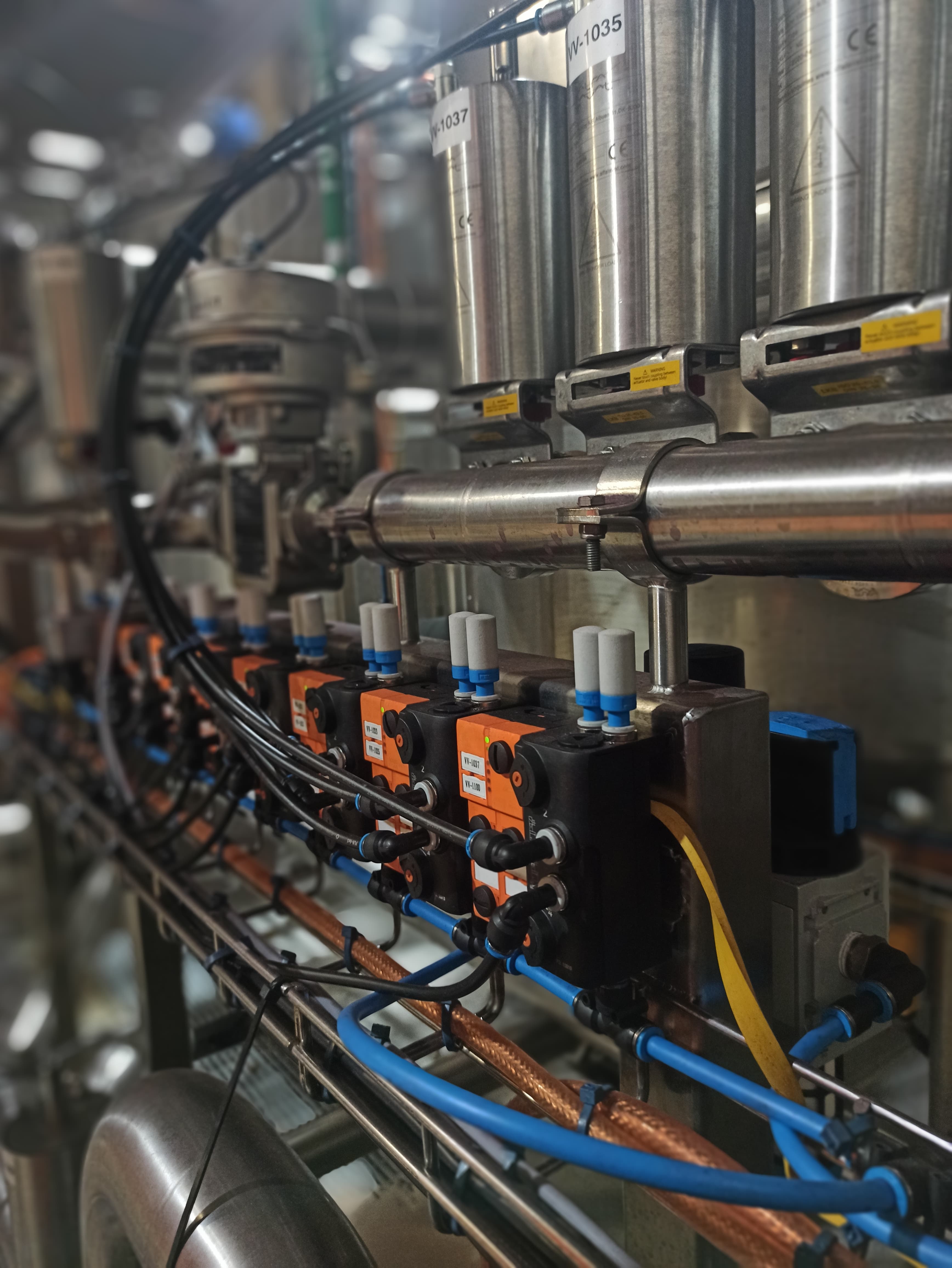
Industrial Automation & Control Systems in Melbourne and Australia
Metromotion Controls is an industrial automation and control systems engineering company in Mount Waverley, Melbourne, founded in 2012. We scope, program, build, commission and support the PLC, SCADA, HMI, control panel and production data systems that run manufacturing sites across Victoria and Australia.
The full control-system scope, each part a service in its own right
Industrial automation projects usually span several of these. Engage us for the full scope, or go straight to the page that matches the work you need.
PLC, SCADA & HMI Programming
PLC programming, SCADA programming and HMI screen work that operators and maintenance teams can support.
Electrical Control Panel Engineering
Electrical control panel engineering for Melbourne production sites: build-ready drawings, ratings, panel-builder coordination, FAT and as-built handover.
Industrial Systems Integration
Filling, checkweighing, wrapping, CIP and batching tied together through defined machine handshakes, line states, PLC networks and data interfaces.
OT Networks, Edge & Remote Access
Segmented OT networks, industrial Ethernet, server architecture and secure remote access that support faster fault response and remote diagnostics for control systems.
Functional Safety & Safety Systems
Functional safety, machine safety automation and safety PLC programming to IEC 61511, IEC 62061, ISO 13849 and AS 4024.
Automation Upgrades, Retrofits & Support
Staged modernisation for legacy environments, planned around production schedules.
Automation Support & Maintenance
Remote and onsite support for PLC, SCADA, HMI, OT network and electrical control issues.
Commissioning, FAT & SAT
FAT, SAT, loop checks, startup support and defect closeout before production handover.
Ignition SCADA & MES Integrator
Ignition SCADA, historian, reporting and MES functions designed, built and supported by an Ignition Gold Certified System Integrator in Melbourne.
Switchboard & MCC Design
Industrial switchboard and MCC design to AS/NZS 61439: ratings, form of separation, drawings and specifications that partner builders fabricate from.
Production sites we have worked on
- Chobani
- La Casa del Formaggio
- Real Pet Food Company
- Peters Ice Cream
- Sakata (Smith's Snackfood Company)
- Patties Foods
- Tibaldi
- Bulla
- McCormick
- Cobs Fine Foods
- Remedy Drinks
- Haigh's Chocolates
- JC Smale
- Steamtech Engineering
- Lactalis Australia
- Arnott's
- Orora
- Austral Bricks
Platforms we program and support
- Rockwell Allen-Bradley
- Siemens
- Ignition
- AVEVA Wonderware
- Citect SCADA
- Schneider
- Omron
Scoped, tested and handed over, with startup and support covered
- 01
Scope
Walk the line, review P&IDs and agree how the control system should behave before code is written.
- 02
Design
Control philosophy, software structure, electrical and panel drawings, I/O and network architecture.
- 03
Build & FAT
Code, panels and simulation tested against the agreed philosophy before anything reaches site.
- 04
Commission
Cutover plans with rollback steps, SAT, loop checks and operator handover inside the agreed window.
- 05
Support
Backups, documentation, remote diagnostics and planned maintenance after go-live.
Recent industrial automation projects
Sakata (Smith's Snackfood Company)
Sakata (Smith's Snackfood Company) added new production equipment beside existing assets and needed the controls layer to remain consistent. Metromotion Controls delivered field device, network, PLC and SCADA integration so the line entered service with clearer interfaces and handover support.
Chobani
Chobani needed a controls partner to help establish its Australian manufacturing operation with new production lines and site infrastructure, and the relationship has had to keep adding and optimising lines without disturbing production already running on site. Metromotion Controls supported the initial setup and has continued to add, optimise and support production lines over the years, bringing process, packaging and site services onto common control and data interfaces so each addition extends one operating environment rather than a separate island. The scope spans plant services including boilers, refrigeration, trade waste, power monitoring and water usage monitoring, plus OEE, site data analytics and contextualised production data from lab equipment and other external sources.
La Casa del Formaggio
La Casa del Formaggio needed a greenfield cheese manufacturing facility to support production growth. Metromotion Controls delivered the electrical and automation scope from design through commissioning, building out 3 Motor Control Centres and 21 PowerFlex525 VSDs for the plant drives and tying the process together through 30 PID loops and 16,237 Ignition tags. The scope covered MCC design, Ignition visibility, process automation, CIP controls, training and handover.
How we approach the work
Scope starts with the process, not the platform
Before any code is written, we map how the plant actually runs. That usually means walking the line, reviewing P&IDs and working with operations, maintenance and quality to identify downtime causes and control gaps. Manufacturers usually call when a line needs more reliable control, an OEM machine needs to be integrated, an old PLC or SCADA system is becoming hard to support, or a shutdown window needs careful automation delivery. By the time programming starts, the team has agreed how the control system should behave across shifts, alarms, interlocks and changeovers. That shared baseline reduces scope drift, late rework and commissioning risk.
Melbourne base, Australia-wide delivery
Metromotion Controls works from Mount Waverley for production sites in Melbourne, regional Victoria and interstate. The control discipline is the same wherever the site is; the practical questions are platform support, reliable backups, shutdown timing, site safety rules and how production will be protected during change. We separate what can be engineered, simulated and reviewed off site from the work that must happen on the plant floor, then plan site attendance around FAT, cutover, commissioning and operator handover. That structure keeps interstate projects controlled without unnecessary travel, and keeps Melbourne projects moving between site visits.
Brownfield and mixed-platform sites
Most plants run a mix of platforms: Rockwell on one line, Siemens on another, Omron or Schneider on older equipment. We design new work so it integrates cleanly with what is already in place. Reusable templates for alarms, interlocks, faceplates and diagnostics are aligned to site standards, which gives operators and maintenance teams a consistent system across mixed vendors. On brownfield sites the installed state rarely matches the drawings, so we verify real I/O, comms paths and interlocks early, which is what keeps the budget and the outage window honest.
Process depth for food, beverage and dairy
Scoping a control system well starts with reading the P&ID the way the process behaves. Tracing each transfer and CIP path tells us where a pump should ramp on a VFD and where a valve needs characterised, profiled closure so the line does not water hammer when flow stops. The same review identifies which loops are fast and which are slow: flow and pressure loops suit PI control, thermal loops on pasteurisers, glycol, steam and hot water need full PID with anti-windup, and surge or level points are better held with averaging control. CIP is scoped as a distinct operating mode tuned separately from production, with batching, pasteurisation, packaging integration and traceability requirements carried through to the data layer.
Full project delivery, or a specific scope
Some clients engage Metromotion Controls for full project delivery: design, software, panels, factory testing, commissioning, training and handover. For manufacturers looking for an automation contractor in Melbourne, this project-delivery scope provides one accountable controls team from process scoping through startup. Others bring us in for PLC programming, FAT support or commissioning leadership when their own team is stretched. In either case, we use peer-reviewed code, structured simulation, clear documentation and version-controlled changes. On tight shutdowns, cutover plans include bypass logic, rollback steps and defined decision points before site work begins. This page covers the full control-system scope; the PLC, SCADA and HMI programming page is the dedicated page for programming-only work.
Common questions
When is the right time to bring you in on a new project?
Bring controls engineers in during front-end design, while P&IDs are being drafted and equipment is being specified. Early controls input avoids late redesign, confirms I/O, panel space and network capacity, and makes FAT a real validation step.
Will you work with our existing standards and preferred vendors?
Yes. Adapting to site standards and mixed vendor environments is a core part of what we do. We extend your naming conventions, alarm philosophy and preferred hardware rather than replacing them. Where we identify a worthwhile improvement, we will recommend it with a clear rationale and leave the final decision with you.
How do you reduce commissioning risk on a live plant?
Through careful preparation. We simulate where it adds value, close out FAT defects before equipment leaves the workshop, and plan cutovers with rollback steps in case adjustment is needed.
Do you provide industrial automation services in Melbourne?
Yes. Metromotion Controls is based in Mount Waverley and delivers industrial automation, PLC programming, SCADA, electrical design and commissioning for Melbourne manufacturers, Victorian plants and interstate production sites. If you need a control systems integrator in Melbourne, we can support both project delivery and ongoing site improvements.
Do you deliver industrial automation projects across Australia?
Yes. Metromotion Controls delivers industrial automation projects for Australian production sites from its Melbourne base, with site work planned around FAT, shutdown windows, commissioning and support requirements. National work can combine remote engineering, simulation, secure diagnostics and targeted site attendance so interstate projects stay controlled without unnecessary travel.
What should a manufacturer look for in an industrial automation company in Melbourne?
Compare process understanding, PLC and SCADA depth, commissioning methods, support after go-live and proof on similar production sites. Check named project evidence, client references and independently verifiable platform credentials rather than relying on a company calling itself the best. Metromotion Controls publishes relevant project work on this site and identifies its Ignition Gold Certified System Integrator and Rockwell PartnerNetwork recognition for off-site verification.
What does an industrial automation company do?
An industrial automation company designs, programs, commissions and supports the control systems that run production equipment. That can include PLC programming, SCADA and HMI screens, drives, instruments, control panels, safety systems, plant networks, OEM machine integration, historian data, production reporting and ongoing support for maintenance and operations teams.
What makes Metromotion Controls suitable for food and beverage automation?
We understand hygienic production, batching, CIP, packaging, utilities, traceability and live-site commissioning constraints. The control scope is planned around production risk, maintenance access and lifecycle support, so the system stays maintainable well after handover.
What is a control systems integrator?
A control systems integrator designs, programs, builds and commissions the automation that runs a plant, connecting PLCs, SCADA, HMIs, control panels, drives, instruments and OEM machines into one coordinated system. The role covers the full lifecycle, from process scoping and P&ID review through electrical design, software, factory and site acceptance testing, commissioning and ongoing support. Metromotion Controls works as an independent integrator across Rockwell, Siemens, Ignition and other platforms, so the design follows the production process rather than a single vendor.
Industries, projects and guides behind this service
Sakata product line integration
New product line integration for FMCG and packaging operations.
Food and beverage automation Australia
Automation, traceability, CIP, SCADA and production data for Australian food and beverage plants.
Dairy processing automation Australia
Controls for yoghurt and cheese plants, milk receival, pasteurisation, CIP and production reporting.
Pet food automation
Batch, recipe, work order, CCP and OEE systems for pet food manufacturing environments.
Chobani greenfield yoghurt plant
Large capital project delivery across process automation, electrical engineering and commissioning.
From a P&ID to control logic
How an experienced team reads a P&ID and a short conversation and turns it into sequences, interlocks and control loops.
Need support with industrial automation & control systems?
Speak directly with an engineer about scope, timing and technical constraints.