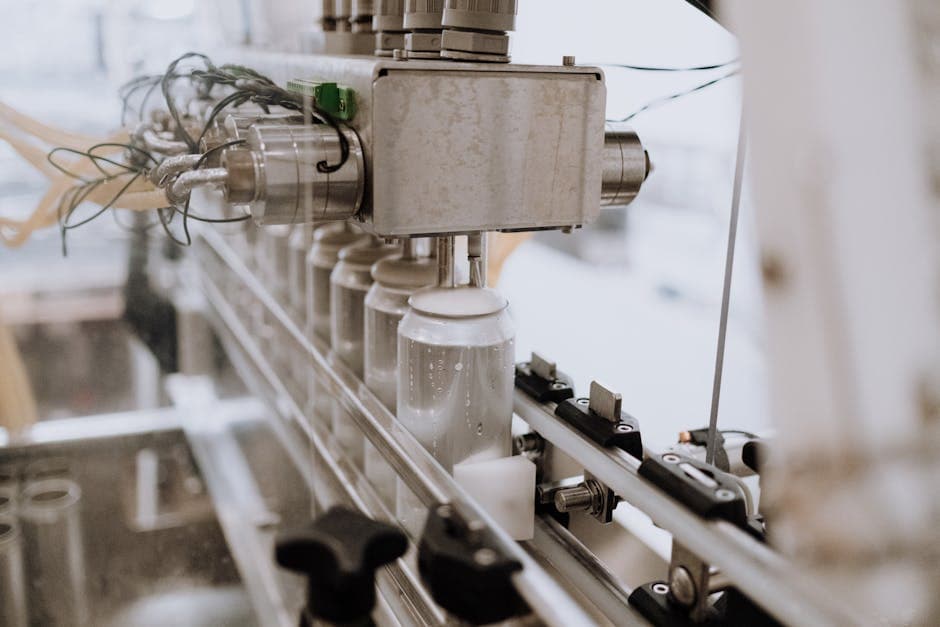
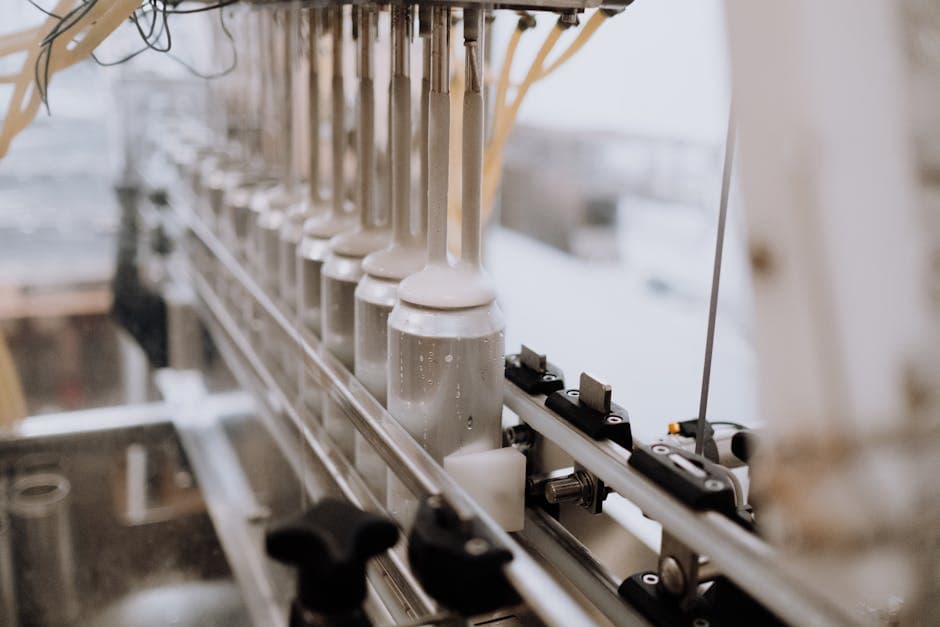
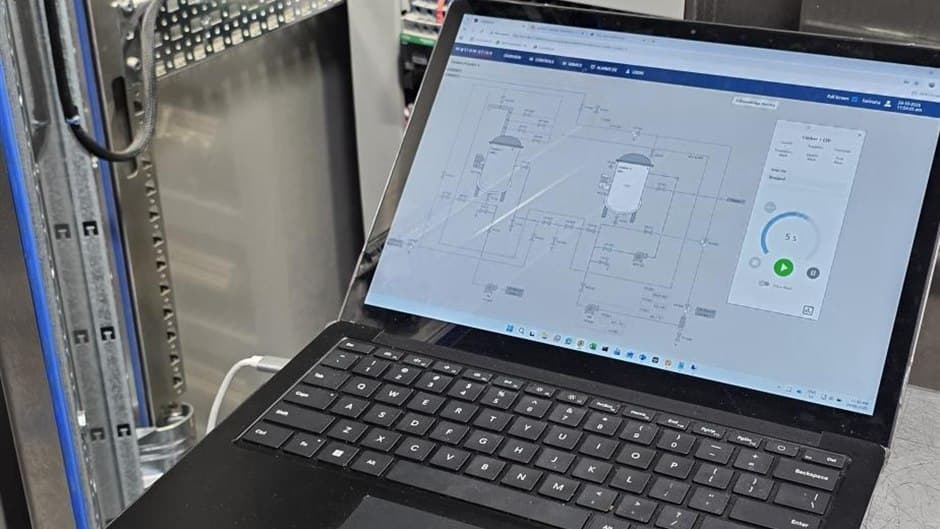
Food and beverage automation in Australia covers two related but distinct problems. Process automation makes the product through mixing, batching, fermentation, pasteurisation, cleaning and transfer. Packaging automation fills, seals, labels and palletises the finished goods. The control patterns differ on each side, and the most reliable projects are scoped around the one process area that already limits the site rather than a whole-of-plant rebuild. Metromotion Controls is a control systems integrator based in Mount Waverley that works across these problems for food and beverage plants in Melbourne, Victoria and across Australia.
This post supports our food and beverage automation Australia, PLC programming Melbourne and control systems integrator Melbourne pages where process and packaging data come together. The aim here is to give a working picture of the standards, the control patterns and the decisions that shape a food plant automation project.
Process automation versus packaging automation
The clearest way to plan a food plant automation project is to recognise that the process side and the packaging side are different engineering problems with different control patterns.
Process automation is about sequence integrity, recipe consistency, thermal control and hygiene. A make area heats, holds, mixes, ferments and transfers product through vessels and skids. The dominant control techniques are batch sequencing structured to ISA-88 and continuous PID loops for temperature, flow and level. Errors here affect product safety and quality directly, so the logic has to keep product in a defined safe state through any interruption.
Packaging automation is about coordinated high-speed motion, fast changeover and line balancing. Fillers, cappers, labellers, cartoners and palletisers run as a connected line where the bottleneck machine sets the rhythm and accumulation buffers absorb short stoppages. The dominant control pattern is the PackML state and mode model from the OMAC organisation, which gives every machine on the line a common set of states such as idle, execute, held and aborted, so the line coordinates predictably and reports stoppages in a consistent way.
The two halves meet at the data layer. Lot identification created on the process side has to follow the product onto the packaging line so that a finished pallet can be tied back to the batch and the raw materials it came from. Performance data from both halves feeds the same overall equipment effectiveness picture. Designing that data boundary early is what stops the process and packaging systems becoming two islands that quality and planning have to reconcile by hand.
The standards that shape a food plant project
Several standards apply at once on a food and beverage project, and naming the relevant ones early gives engineering and operations a shared structure.
| Standard | Number | What it governs |
|---|
| Batch control | ISA-88 / IEC 61512 | Models and terminology for batch sequences, recipes and batch records |
| Alarm management | ISA-18.2 / IEC 62682 | How alarms are rationalised, prioritised and presented |
| Packaging machine state | PackML (OMAC, in ISA-TR88.00.02) | Common machine states and modes for packaging lines |
| Hygienic equipment design | 3-A Sanitary Standards | Sanitary design of equipment surfaces that contact product |
| Food safety and traceability | Australia New Zealand Food Standards Code | Lot identification, recall obligations and food safety practices |
ISA-88 is the international standard for batch control, approved by the ISA and adopted by the IEC as IEC 61512. It separates a batch process into a physical model (what equipment exists), a procedural model (what the plant does) and a recipe model (what product and parameters apply). Keeping the three separate is what makes recipes portable across products and equipment logic reusable across recipes. We cover this in depth in our guide to batch control and ISA-88 for food manufacturing.
ISA-18.2 matters because a hygienic process under upset can flood an operator with alarms exactly when clear information is most needed. A rationalised alarm system, with each alarm carrying a defined priority and a required operator response, keeps the response focused rather than buried in noise.
The 3-A Sanitary Standards govern hygienic design of equipment that contacts product. They influence controls work because drainable vessels, the absence of dead legs and cleanable instrument mountings all shape where sensors go and how a phase has to leave equipment clean and drained at the end of a step.
Batch control and recipe management
On the process side, the recipe is the heart of the system. A recipe carries the product-specific information: ingredients, quantities, setpoints and the procedure to run. ISA-88 recognises general, site, master and control recipes, which lets a corporate formulation move down to a specific site and a specific run without rewriting the underlying equipment logic.
The engineering value comes from the procedural model, where the sequence is built from reusable phases. A phase is a single discrete action such as fill to weight, ramp to temperature, or dose culture, and it belongs to the equipment rather than to any one product. Operations group phases into meaningful steps, unit procedures organise the sequence within one vessel, and a procedure ties the whole batch together.
Recipe management as a discipline means a formulation change becomes a parameter change rather than PLC rework. Introducing a flavour variant is a matter of configuring a new recipe against the existing phase library, not writing new ladder logic, and a phase such as ramp to temperature is tested once and reused across every recipe rather than re-validated per product. This separation is also what lets recipe versions be controlled, approved and recorded, which the traceability obligations later depend on.
A worked example: a CIP sequence structured to ISA-88
The following figures are illustrative engineering values to show the structure, not a result from any specific plant. Consider a clean-in-place sequence on a mixing tank in a dairy make area. A CIP run is a batch in the ISA-88 sense: it is a unit procedure made of parameterised phases that the PLC executes in order.
| Phase | Illustrative target | Verification |
|---|
| Pre-rinse | Ambient water, for example 2 to 3 minutes | Drain runs visually clear |
| Caustic wash | Caustic at a typical 1 to 2 percent, 75 degrees C, recirculate for example 10 minutes | Return-line conductivity confirms caustic strength |
| Intermediate rinse | Ambient water, for example 2 minutes | Return conductivity falls to a rinse-clear target |
| Acid wash | Acid at a typical concentration, 60 degrees C, recirculate for example 5 minutes | Return-line conductivity confirms acid strength |
| Final rinse | Potable or treated water, for example 3 minutes | Return conductivity and, where required, microbiological check |
Each phase is parameterised by time, temperature, flow and conductivity, so the same CIP unit procedure is reused across several circuits with the targets set per circuit, the phases unchanged between a short tank circuit and a longer pipework circuit. Because the run is structured this way, the control system produces a CIP record from the same procedural model as a product batch. That record shows the circuit was cleaned to its specification, which is the evidence a plant needs before the next production run starts.
This also shows where phase states earn their place. If an operator holds the caustic wash partway through, the logic should maintain a safe recirculating condition rather than freezing mid-action and leaving caustic stagnant in the line. If the phase aborts, it should leave the circuit drained and isolated to a defined safe state rather than wherever it happened to stop. Our guide to CIP automation and hygienic processing in Australia covers this sequencing in more detail.
Pasteurisation and thermal control
Thermal processing is where process control becomes a food safety function rather than only a quality one. A high-temperature short-time pasteuriser holds product above a target temperature for a defined time, with a flow diversion valve that returns product to the balance tank if the holding-tube temperature drops below setpoint. The control task combines a well-tuned PID loop on the heating medium with interlocked diversion logic that is treated as a protective function.
Two points matter for the controls design. First, the temperature loop has to hold setpoint tightly through load changes, because a slow or oscillating loop near a critical limit risks either unnecessary diversion or, worse, under-processed product reaching the holding tube. Loop tuning on these duties is a specific skill, which we cover in our guide to PID loop tuning for food and dairy. Second, the diversion decision and the recording of time-at-temperature feed directly into the batch record and the site HACCP plan, so the critical control point monitoring is part of the control system design from the start, not an instrument added afterwards.
The recorded thermal data also becomes part of the traceability picture. A batch record that captures actual holding-tube temperature against setpoint for the full run is the evidence that the critical control point was held, which is exactly what an auditor or a recall investigation will ask for.
Traceability and OEE
Two outcomes justify much of the data work in a food plant: traceability and overall equipment effectiveness.
Traceability comes from the control system recording each lot against the equipment, recipe version, actual parameters and timing it ran under. Built this way, the record is contemporaneous and attributable by construction rather than reconstructed from operator logs after the fact. During a recall, that record lets a quality team isolate exactly which lots ran under the conditions in question. The narrower the isolation, the less product is caught up and the easier the position is to defend. This is where the process and packaging data boundary pays off, because lot genealogy has to follow the product from the make area through filling to the finished pallet.
Overall equipment effectiveness measures availability, performance and quality so that lost time becomes a measured baseline rather than an impression. The honest caution is that an OEE figure is only as good as its definitions. If the loss buckets, the ideal cycle time and the definition of a good unit are not agreed first, the number invites argument rather than action. We set out where the metric helps and where it misleads in our guide to the limitations of OEE in manufacturing. Both traceability and OEE depend on a sound data and historian layer, which connects to our industrial data and IIoT work.
The Australian context: food safety records and regulators
Australian food businesses operate under the Australia New Zealand Food Standards Code, administered by Food Standards Australia New Zealand. Two parts of the Code shape why batch and lot records matter to the control system.
Standard 3.2.2, Food Safety Practices and General Requirements, requires manufacturers, wholesale suppliers and importers to have a written recall plan, to use it when a recall is needed, and to keep recalled food clearly identified and held separate from other food. The companion guidance on food recalls sets out how that obligation works in practice. Standard 1.2.2, Information Requirements for Food for Sale, sets the lot identification requirement so that any unit of food can be tied back to the lot it came from.
Lot identification is the mechanism that makes a fast recall possible, and the control system is where that identification becomes reliable. When the recipe layer, the thermal records and the packaging line all carry the same lot reference, the recall path is a query rather than a paper chase. Site HACCP plans sit alongside the Code and usually drive the most specific monitoring requirements, since the critical control points the plant has identified are the ones the control system must record without fail.
How to choose where to start
Deciding what to automate first is a question of where the plant already feels the pain and where a structured approach returns value fastest.
| If the main pressure is | The first project is usually | Why |
|---|
| Inconsistent product between runs | Batching and recipe management to ISA-88 | A recipe layer makes every run repeatable and removes operator-to-operator variation |
| Long or unverifiable cleaning | CIP automation with recorded phases | Parameterised CIP proves the circuit was cleaned and frees the line faster |
| Slow recalls or weak records | Traceability and the data layer | Lot genealogy across process and packaging turns a recall into a query |
| Lost time on the packaging line | Line coordination to PackML and OEE measurement | A consistent state model exposes where throughput is actually lost |
| Ageing or unsupported controllers | A staged controller migration | Restructuring sequences into phases makes the later work reusable |
The decision should follow the site's actual requirements, not a generic template. A single fixed-sequence line making one product the same way every time often does not need a full batch model, while a multi-product plant on shared equipment usually does. Where the existing controllers are ageing, our guidance on legacy PLC migration in Australia and the broader automation upgrades service cover how to stage the change without a single high-risk shutdown.
Common mistakes and pitfalls
Most of the difficulty in food and beverage automation comes from a handful of recurring errors rather than from the technology itself.
- Treating packaging and process as one undifferentiated automation problem, then forcing the same control pattern on both and ending up with weak line coordination and a brittle batch system.
- Mixing recipe parameters into equipment logic, so a formulation change still means a PLC change. The value of the model comes from keeping the recipe separate from the physical and procedural layers.
- Designing the hygienic sequence without the mechanical and process design, so phases leave equipment in conditions that are hard to clean or that strand product after a hold or abort.
- Tuning a pasteuriser temperature loop loosely, so it either diverts too often or sits too close to a critical limit, when a tighter loop would hold setpoint cleanly.
- Building an alarm system without rationalising it to ISA-18.2, so operators face an alarm flood during the exact upset where clear information matters most.
- Reporting OEE without agreeing the loss buckets, the ideal cycle time and the definition of a good unit, so the figure invites argument rather than action.
- Designing batch and CIP records for the screen rather than for retrievable, attributable traceability, then having to retrofit data integrity when an audit or recall asks for it.
- Attempting a site-wide rebuild in one project, when a tighter first scope tied to one process area would have been easier to deliver and to justify.
What this means for your plant
Food and beverage automation in Australia delivers best when the project is scoped around the process or packaging area that already limits the site, structured to the relevant standards from the start, and built so that traceability and performance data flow across both halves of the plant. ISA-88 gives the process side a consistent batch and CIP structure, PackML gives the packaging side a consistent state model, hygienic design constraints shape how the sequences behave, and the Food Standards Code sets the records the system has to support. The right next step is usually a structured assessment of where sequence control or record quality is limiting the site, which produces the clearest scope and the strongest business case. That assessment connects naturally to our industrial automation and commissioning work.