Platforms and vendors
- GuardLogix and Compact GuardLogix
- Siemens S7-1500F
- Pilz safety controllers and relays
- Safety I/O and instrumentation
- Emergency stop and guarding interfaces
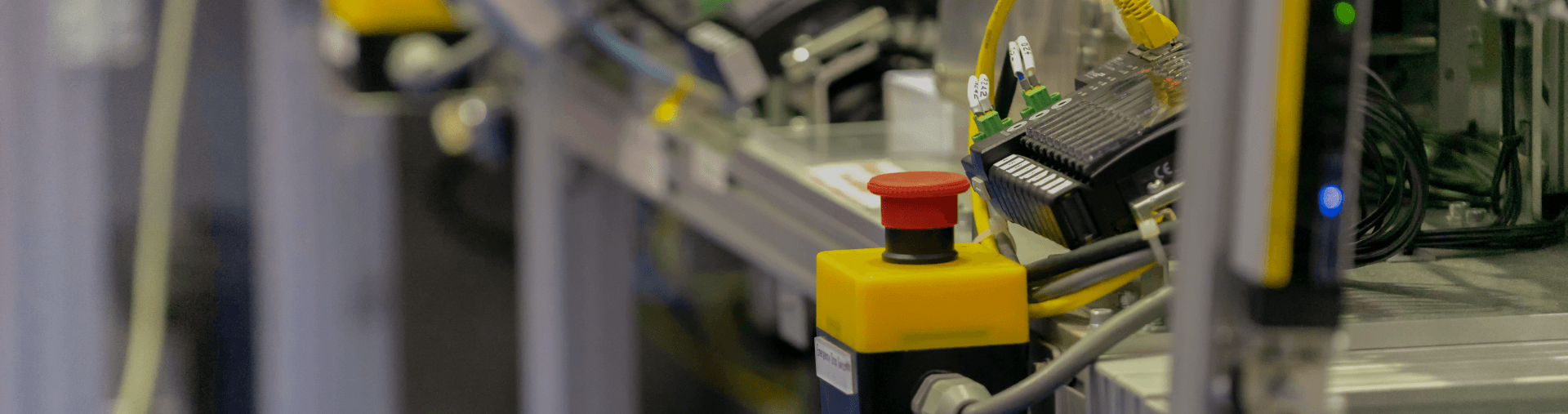
Metromotion Controls delivers functional safety engineering, machine safety automation and safety PLC programming to IEC 61511, IEC 62061, ISO 13849 and AS 4024, starting from hazard identification and risk assessment, delivered by a control systems integrator working from Mount Waverley across Australia.
Safety systems need clear requirements, correct implementation and evidence that the final installation behaves as intended. Metromotion Controls supports risk assessment, machine safety automation, safety PLC programming, shutdown logic, validation testing, proof test planning and lifecycle records.
Functional safety starts with clear hazard identification and realistic risk assessment. We support HAZOP, LOPA and SIL determination activities, then convert risk targets into specific safety requirements. Standards including IEC 61511, IEC 62061 and ISO 13849 are applied based on process and machinery context. We define safety instrumented functions, response times, proof test intervals and bypass management rules with operations and maintenance input. This stage is particularly important when facilities are expanding hazardous process areas or introducing new high-energy machinery. By documenting assumptions and risk acceptance criteria clearly, we reduce ambiguity and improve compliance confidence during audits. Metromotion Controls focuses on solutions that are both defensible and workable in day-to-day operations.
Our engineers design and implement safety architectures using platforms such as GuardLogix, S7-1500F and compatible safety I/O and instrumentation. We develop cause and effect matrices, shutdown logic, permissives and reset philosophies that align with site procedures and training capabilities. Testing includes factory verification, loop checks, trip testing and documented evidence of requirement coverage. Where mechanical and electrical scopes intersect, we coordinate closely with OEMs and site teams to confirm final installed behaviour. A common driver for shutdown redesign is a utility area where nuisance trips are interrupting production. Reviewing sensing strategy, voting logic and diagnostics can reduce spurious trips while preserving the required safety integrity. We deliver safety systems that support both protection goals and operational stability.
Machine safety automation covers guarded zones, reset behaviour, access states, safety-rated device interfaces and operator messages so production teams understand why a machine is held and what must happen before restart. Safety PLC programming is documented against requirements and tested with clear evidence.
Safety is not complete at startup, so we support lifecycle activities including management of change, periodic proof testing and performance monitoring. We provide traceable documentation from requirement specification through design, verification, validation and handover. This includes test records, deviation logs, training notes and maintenance guidance for ongoing compliance. We can also run gap assessments on existing systems where documentation or testing history is incomplete, which is common on older plants that have evolved without a full lifecycle framework. Structured safety governance gives audit-ready evidence and keeps risk controls demonstrably effective over time.
IEC 61511 is focused on process industry safety instrumented systems, while ISO 13849 is commonly applied to machinery safety control systems. The correct standard depends on the application context and risk profile.
Yes. We can perform lifecycle gap assessments, identify high-priority remediation actions and support staged improvements so compliance and risk reduction can be improved without unnecessary full replacement.
Proof tests verify that safety functions still perform as designed. We help define realistic intervals, procedures and records so tests can be completed efficiently during planned maintenance windows.
Electrical control panels, motor control systems and MCC design, with EPLAN documentation and FAT.
Commissioning engineers, acceptance testing, loop checks, startup support and control system readiness audits across Australia.
PLC programming, troubleshooting, commissioning and legacy migration for Melbourne production sites.
Melbourne automation contractor capability for scoped control-system projects from design through commissioning.
IEC 61508 and IEC 61511, SIL determination by risk graph and LOPA, the safety lifecycle, and how machine safety differs.
ISO 12100 risk assessment, the hierarchy of risk reduction, PLr to ISO 13849-1, SILcl to IEC 62061 and the AS/NZS 4024 machinery safety series.
Process control for chemical, process and utility plants: loops, sequences, batch, boilers, steam and utilities.
Electrical control panel engineering for Melbourne production sites: build-ready drawings, ratings, panel-builder coordination, FAT and as-built handover.
FAT, SAT, loop checks, startup support and defect closeout before production handover.
PLC programming, SCADA programming and HMI screen work that operators and maintenance teams can support.
Speak directly with an engineer about scope, timing and technical constraints.