Platforms and vendors
- Managed industrial switches
- VLANs and firewalls
- OPC UA
- MQTT
- VPN and remote access gateways
- Virtualised SCADA servers
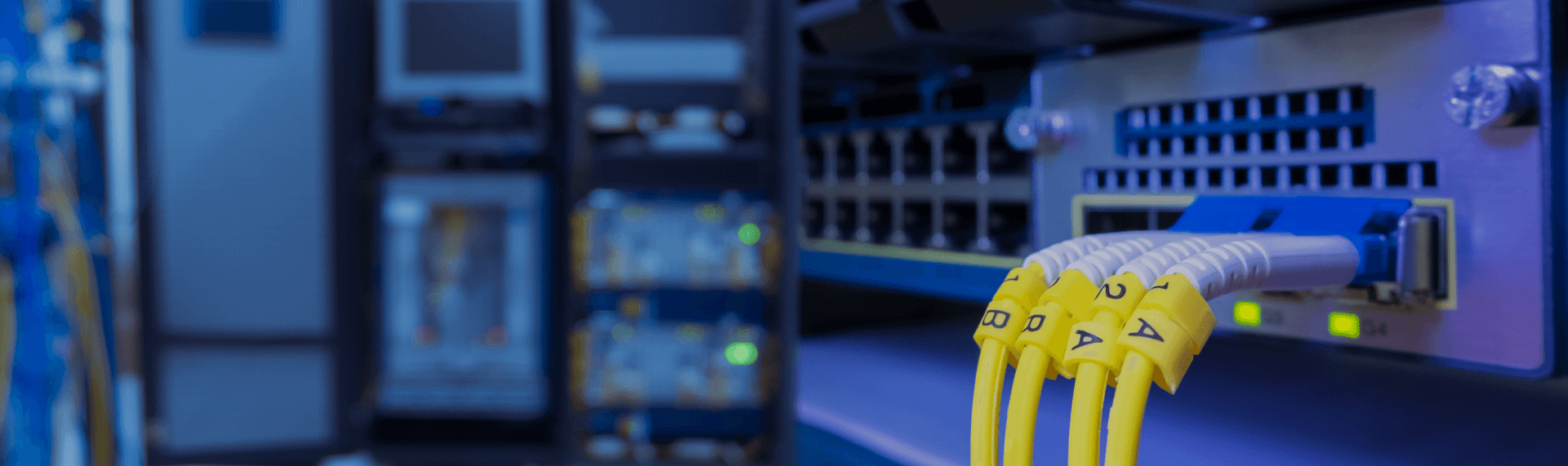
Metromotion Controls designs OT networks, industrial Ethernet and secure remote access so faults are diagnosed faster and remote sites can be supported without a site visit, designed by our Mount Waverley team for production sites across Melbourne and regional Victoria.
Control systems depend on reliable network and server infrastructure. Metromotion Controls designs OT networks, industrial Ethernet, secure remote access and edge infrastructure for PLC, SCADA, historian and reporting systems.
We assess current OT network topology, device health, addressing practices and segmentation boundaries before recommending upgrades. Reviews include switch utilisation, link resilience, spanning tree behaviour, time synchronisation and critical service dependencies. We map assets into practical zones aligned to IEC 62443 concepts, then define conduits and firewall policies that support production and maintenance needs. Typical technologies include managed industrial switches, redundant ring protocols and VLAN segmentation with documented recovery procedures. This work is essential when sites experience intermittent communication faults, unexplained controller dropouts or poor visibility of network ownership. By establishing a clear baseline and future-state architecture, we help clients improve reliability while preparing for expansion, remote diagnostics and stronger cyber posture.
Secure remote access is designed around least privilege, strong authentication and auditable session control. We implement vendor and internal access pathways with role-based permissions, multi-factor authentication and defined approval workflows. Edge infrastructure can include protocol gateways, local historians, patch repositories and remote engineering jump hosts. We also define operational rules for who can connect, when access is permitted and how emergency support is handled. A common use case is supporting interstate sites that need rapid PLC diagnostics without waiting for travel. Properly implemented remote access shortens downtime while maintaining governance and cybersecurity expectations. Metromotion Controls integrates these capabilities with your IT security team so access controls are practical, enforceable and aligned with broader business policy.
Control servers and virtual infrastructure require planned lifecycle management to avoid unplanned outages and unsupported systems. We design backup schedules, snapshot policies, patch windows and recovery tests for SCADA, historian and engineering servers. Where possible, we implement redundancy and documented failover sequences so operations can recover quickly from hardware faults or software corruption. Standards and guidance from IEC 62443 and NIST frameworks inform hardening and maintenance strategy. This service is valuable for sites running legacy operating systems or ad hoc backups that have never been tested under pressure. We provide clear runbooks, restoration drills and ownership matrices so teams can respond confidently during incidents. The outcome is a resilient OT platform that supports both day-to-day reliability and long-term modernisation.
A full assessment is usually recommended every one to two years, or sooner after major plant changes. Regular reviews help detect hidden single points of failure and keep documentation current.
Yes, when designed with multi-factor authentication, session auditing, segmented access paths and strict approval workflows. Security comes from the combination of architecture, governance and disciplined access control.
Yes. We plan staged migrations, test recovery paths and validate application performance so sites can modernise infrastructure with minimal production disruption.
We segment the network around how the plant operates, so production, packaging, CIP and utilities sit in zones that match their criticality and washdown environment. Time-sensitive control traffic for fillers, checkweighers and batching is kept clear of historian and reporting loads, and remote access paths are scoped so support engineers can reach the right line quickly without exposing critical control assets. The result is a network that holds up under production conditions and supports faster fault response on the lines that matter most.
24/7 remote automation support is available Australia-wide to contract and SLA clients. Get in touch to find out more.
Ignition Gold Certified System Integrator for Ignition SCADA, historian, reporting and MES functions.
OEE, reports, quality, CIP, maintenance and energy data from the team that builds and programs the lines.
New product line integration for FMCG and packaging operations.
IEC 62443 zones and conduits, the Purdue model, segmentation, secure remote access and the ACSC Essential Eight in an OT context.
Live OEE, line status and stop reasons read directly from the PLCs on food and beverage lines.
The ISA-95 levels and the Purdue model explained on a food line, with where each piece of context lives.
Tracing production-impacting latency on a packaging OT network, with as-built schematics and recommendations.
Certificate-secured MQTT connectivity for condition monitoring at a brickworks, delivered as a documented reference implementation.
How remote access to PLCs works, what Australian cyber guidance expects and how to control vendor access.
Packaging lines depend on timely communication between controllers, drives, HMIs and the machines around them, so network latency shows up as lost output rather than as an IT fault. Orora needed to understand excessive latency on a production-critical OT network where the disruption was already affecting output and the investigation had to proceed without taking the running network down. Metromotion Controls examined the network topology, device configurations and traffic behaviour to isolate where latency was being introduced, then captured the as-built environment in accurate Ethernet schematics. The work produced recommendations focused on restoring performance and reducing repeat disruption.
Heavy-industry plants such as brickworks run continuous processes in heat and dust, so condition data has to be collected securely and without disturbing production control. Austral Bricks is one of Australia's largest brick manufacturers, operating multiple production sites across the country. At their Wollert facility, the team wanted to evaluate MQTT as a modern connectivity protocol for extracting machine data and enabling condition monitoring at scale. Metromotion Controls designed and delivered a structured MQTT trial, establishing secure certificate-based connectivity, documenting the architecture, and providing a completed implementation the site team could validate and extend. The project gave Austral Bricks a working reference implementation for MQTT-based data collection on industrial equipment.
The can filling line at Remedy Drinks is a production-critical asset. Unplanned downtime on the filler directly affects output and shelf availability. Metromotion Controls was engaged to implement a condition monitoring solution that captured vibration and operational data from the can filler, providing the maintenance team with early indicators of developing faults. The solution used an MQTT-based data collection architecture to feed condition data into Ignition, where it was trended and threshold-monitored alongside production events.
Factory data, OEE, reports, quality, CIP, maintenance and energy from the team that builds and programs the lines.
Remote and onsite support for PLC, SCADA, HMI, OT network and electrical control issues.
PLC programming, SCADA programming and HMI screen work that operators and maintenance teams can support.
Speak directly with an engineer about scope, timing and technical constraints.