1
ISA-88 gives batch control a consistent structure
The physical, procedural and recipe models define how equipment, sequences and parameters are organised. That structure makes recipes portable, repeatable and auditable across every run.
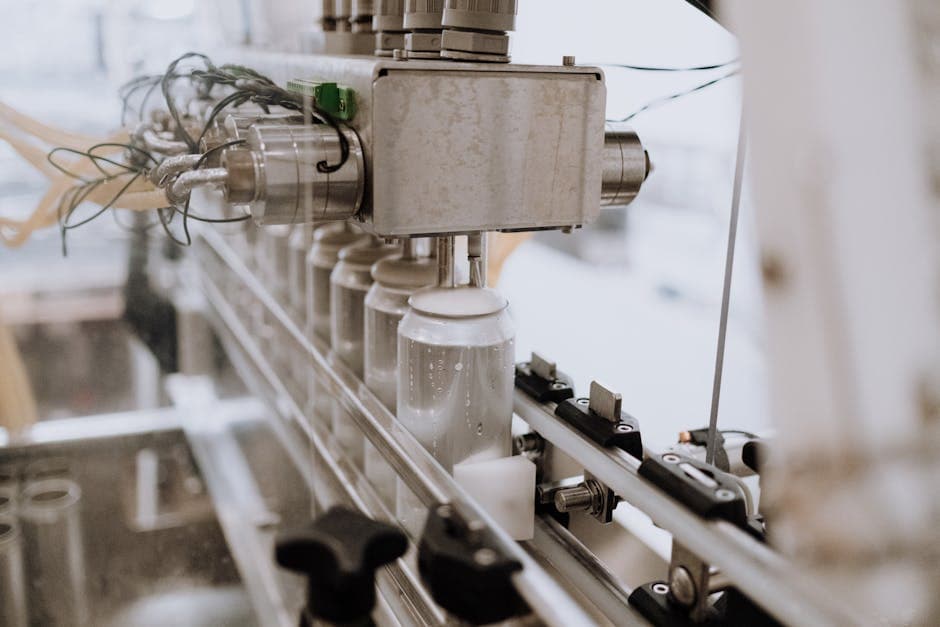
The physical, procedural and recipe models define how equipment, sequences and parameters are organised. That structure makes recipes portable, repeatable and auditable across every run.
Each level of the ISA-88 hierarchy corresponds to a real plant unit you can point to on the floor: vessels, mixers, CIP circuits, dosing skids.
Batch records built from the procedural model give a consistent audit trail across every run. During a recall, lot isolation comes from that recorded data instead of being pieced together from operator logs afterwards.
ISA-88 batch control gives Australian food and beverage manufacturers a structured way to model equipment, procedures and recipes, and to generate consistent batch records from them. Metromotion Controls is a control systems integrator based in Mount Waverley that delivers batch control across Melbourne, Victoria and Australia. Agreeing the ISA-88 structure before PLC, SCADA and reporting work begins gives engineering and operations a shared definition of how each batch should run.
This post supports our systems integration work, where ISA-88 recipes connect to MES and ERP for lot tracking and reporting. Related areas include PLC, SCADA and HMI programming, food and beverage automation and pet food production, which runs on the same recipe and batch model.
ISA-88 is the international standard for batch control, approved by the ISA in 1995, updated in 2010 and adopted by the IEC as IEC 61512-1. It is a design philosophy rather than a product: a common set of models and terminology for describing batch manufacturing, automated or manual. A make area where operators weigh and add ingredients by hand can be described with the same models as a fully automated skid, which is what makes ISA-88 useful as a planning language before any code is written.
The standard is published in four parts, each mapped to the corresponding IEC 61512 part.
| Part | Scope | IEC mapping |
|---|---|---|
| Part 1 | Models and terminology | IEC 61512-1 |
| Part 2 | Data structures and guidelines for languages | IEC 61512-2 |
| Part 3 | General and site recipe models and representation | IEC 61512-3 |
| Part 4 | Batch production records | IEC 61512-4 |
Part 1 carries the day-to-day work on most food and beverage projects, because it defines the models that engineering and operations agree on before build. Part 4 matters once batch records have to satisfy traceability and audit requirements.
Applying the full ISA-88 model to a line that does not need it adds engineering effort and ongoing complexity without a return. The honest test is whether the line has any of the following pressures.
If the same vessels, mixers or fillers run different products, ISA-88 lets one set of equipment logic serve every recipe instead of duplicating code per product.
If R&D and quality change formulations regularly, a recipe layer means parameter changes instead of PLC rework for every new product introduction.
If customers or regulators expect consistent, retrievable batch records, the procedural model produces them the same way on every run.
Where none of these pressures apply, for example a fixed-sequence line that runs one product the same way every time, the full model usually adds more than it returns.
ISA-88 separates batch manufacturing into three models: the physical model (what equipment exists), the procedural model (what the plant does), and the recipe model (what parameters and product apply). Keeping the three separate is what makes recipes portable and equipment logic reusable.
The physical model defines the equipment hierarchy that recipes run against.
| Physical level | Definition | Plant example |
|---|---|---|
| Process cell | The set of equipment that produces a batch | Yoghurt make area |
| Unit | A major piece of equipment a procedure runs in | Pasteurisation vessel V-101 |
| Equipment module | A functional group within a unit | Steam heating skid on V-101 |
| Control module | A single device the PLC drives | Steam control valve |
The procedural model defines the sequence of actions, and it is where most of the engineering value sits. Each level maps to a meaningful unit of plant activity.
| Procedural level | Definition | Plant example |
|---|---|---|
| Procedure | Complete recipe for one batch | Full yoghurt batch: mix, pasteurise, culture, fill |
| Unit procedure | Sequence within one unit | Pasteurisation sequence in vessel V-101 |
| Operation | Group of related steps | Heat, hold, cool |
| Phase | Single discrete action | Ramp to pasteurisation setpoint |
Phases are where the PLC does the actual work; operations, unit procedures and the procedure organise them into a complete recipe.
The recipe model carries the product-specific information: ingredients, quantities, setpoints and the procedure to run. ISA-88 recognises general, site, master and control recipes, which lets a corporate formulation move to a specific site and a specific run without rewriting the underlying equipment logic. A flavoured-milk recipe and a plain-milk recipe can share the same procedure and differ only in their parameters.
The reuse is easiest to see on one piece of equipment running several products. Take a yoghurt mixing tank as the unit, with a phase library the PLC can execute: fill to weight, agitate, ramp to temperature, hold, dose culture, cool and transfer out. Those phases belong to the equipment, not to any one product.
Natural, Greek and fruit-base yoghurt recipes all run on that tank using the same library. What changes is parameters and sequence, not code: fill weight, agitation time, hold temperature and duration, culture dose, and whether a fruit-dosing phase runs at all. A new variant is a recipe configured against existing phases rather than new ladder logic, and each phase is tested once instead of being re-validated per product.
A phase carries more than a running or stopped condition. ISA-88 defines a state model so that operators and the control system can pause, abort and restart a batch safely, and each state has a known meaning that the recipe layer and the operator can both rely on. The states that matter most on a food line are running, held, restarting, aborted and stopped.
| Phase state | What it means on the floor |
|---|---|
| Running | The phase is executing its programmed action. |
| Held | The phase has paused on command and is maintaining a safe condition rather than freezing mid-action. |
| Restarting | The phase is resuming from a held condition back to running, from a known point. |
| Aborted | The phase has stopped on an abnormal condition and is moving the equipment to a defined safe state. |
| Stopped | The phase has ended in a controlled way and the unit is ready for the next step. |
Because the state model is the same for every phase, operator interfaces and recipes behave predictably across the plant, and hold and abort logic is not reinvented per product. Getting the states right is what keeps an interrupted batch recoverable: a held cook phase should maintain temperature and valve positions rather than freeze mid-action, an aborted phase should leave the equipment drained or isolated in a defined safe state, and a restart should resume from a known point instead of forcing a full re-run.
On hygienic equipment this is a product-safety question. A batch that aborts cleanly into a safe state can be assessed, reworked or scrapped on clear evidence; one that aborts into an undefined state puts both the product and the next CIP cycle in doubt. The safe state each phase aborts into should be agreed alongside the plant's protective functions, covered in our guide to functional safety and SIL assessment in Australia.
Australian food businesses operate under the Australia New Zealand Food Standards Code, administered by Food Standards Australia New Zealand (FSANZ). Two requirements shape why batch and lot records matter. Standard 3.2.2 - Food Safety Practices and General Requirements requires manufacturers, wholesale suppliers and importers to hold a written recall plan, use it when a recall is needed, and keep recalled food identified and held separate. Standard 1.2.2 - Information Requirements for Food for Sale sets the lot identification requirement, so any unit of food can be tied back to the lot it came from. ISA-88 batch records are where that identification becomes reliable.
A batch record generated from the procedural model captures the equipment used, the recipe and version, the actual phase parameters against setpoints, and the timing of every step. During a recall investigation, that record lets a quality team isolate exactly which lots ran under the conditions in question instead of reconstructing it from operator logs. The narrower the isolation, the less product is caught up and the easier the position is to defend to an auditor.
A recall is only as defensible as the records behind it, so the question is whether an electronic batch record can be trusted. The data-integrity framing used across regulated industries is ALCOA+: a record should be Attributable, Legible, Contemporaneous, Original and Accurate, with the plus adding Complete, Consistent, Enduring and Available.
ISA-88 batch records line up with that framing when the system is built for it. A record generated automatically from the procedural model as the batch runs is contemporaneous and original by construction; tying each entry to the operator, recipe version and equipment makes it attributable; capturing actual values against setpoints makes it complete and accurate. Designing for ALCOA+ from the start is less work than retrofitting integrity controls onto records that were never structured for it.
For the hygienic processing side of the plant, the same structure keeps CIP records consistent across circuits, recipes and audit cycles, which is part of the same traceability picture.
ISA-88 does not stand alone. In a connected plant, production orders and recipes flow down from ERP and MES through the ISA-95 layer to batch control, and batch records flow back up for lot tracking, genealogy and electronic reporting.
ERP and MES issue the production order and the approved recipe. The batch system runs the procedure and parameters it is handed, rather than holding a separate copy that can drift out of sync.
Completed batch records, material consumption and deviations report back up for lot tracking and reporting. This is the link that makes batch records useful beyond the control room.
This is the boundary our systems integration work sits on, with the reporting and genealogy layer connecting to industrial data and IIoT for batch reporting and OEE. The same information flow is described in our guide to MES and SCADA integration for food plants, and where a batch feeds a packaging line, the state-model thinking has a close counterpart in PackML on packaging lines.
Two platforms account for most ISA-88 batch work in the Australian food and beverage sector. Which one fits depends on the existing equipment, the team's skills and how the site is already integrated.
| Consideration | Rockwell FactoryTalk Batch | Ignition with Sepasoft Batch Procedure |
|---|---|---|
| Best natural fit | Rockwell-heavy plants with existing FactoryTalk infrastructure | Mixed-vendor sites or Ignition SCADA deployments |
| Licensing model | Licensed within the FactoryTalk software stack the site already runs | Ignition's server-based licensing with the Sepasoft module |
| MES integration | Within the Rockwell and FactoryTalk ecosystem | Sepasoft MES modules share the Ignition database and tags |
| In-house support | Suits teams already trained on Rockwell tools | Suits teams standardising on Ignition |
Metromotion Controls is Ignition Gold Certified since 2017 and a member of the Rockwell PartnerNetwork, so the recommendation can follow your existing fleet, skills and integration goals rather than a single product line. For the deeper SCADA platform discussion, see our practical Ignition guide for Australian manufacturers.
Most Australian food plants do not start from a clean slate. Recipes are commonly buried in ladder logic, with each product a slightly different copy of the same sequence. Moving to ISA-88 does not require throwing that away in one shutdown.
This connects directly to automation upgrades and the commissioning discipline that keeps a live plant running through the change, which we cover in our guide to legacy PLC migration in Australia.
Most of the difficulty with ISA-88 comes from a handful of recurring errors rather than from the standard itself.
For multi-product plants and sites facing rising audit requirements, ISA-88 makes the control system easier to manage and the records easier to defend. Structured correctly at the start, it pays back every time a product is introduced, a batch is interrupted, or a record is pulled in an audit or recall. The practical next step is an assessment of how your current recipes are organised and where a recipe layer would return the most value.
Connect OEM equipment, production lines, line controls, data systems and site standards into one operating environment.
PLC logic, SCADA architecture, HMI upgrades, fault finding and historian integration for production sites.
Automation, traceability, CIP, SCADA and production data for Australian food and beverage plants.
Where CIP automation investment pays back: cycle optimisation, digital audit records, queueing and coverage verification.
Checkweigher, metal detector, batch and lab data with lot genealogy, from the systems that run the line.
How CIP automation cuts trade waste and chemical cost with endpoint-driven phases, protects chemical tanks, verifies coverage and records audit evidence.
Key point
Endpoint-driven phases cut cost without weakening the clean
Published 9 May 2026

How a controls engineer reads ISA-5.1 P&ID symbology and derives equipment modules, sequences, interlocks and loops from the drawing plus one conversation.
Key point
A P&ID carries most of the control design already
Published 3 June 2026

Guide to automation for Australian dairy plants: HTST pasteurisation and divert control, CIP, ISA-88 batch control, 3-A hygienic design and FSANZ traceability.
Key point
Pasteurisation control is a safety function, not a process convenience
Published 9 May 2026
Tell Metromotion Controls about the work you are planning and speak with an engineer about the next steps.