1
Plan before spares and recovery become urgent
Most migrations begin because spares, software access, or support coverage are getting thin.
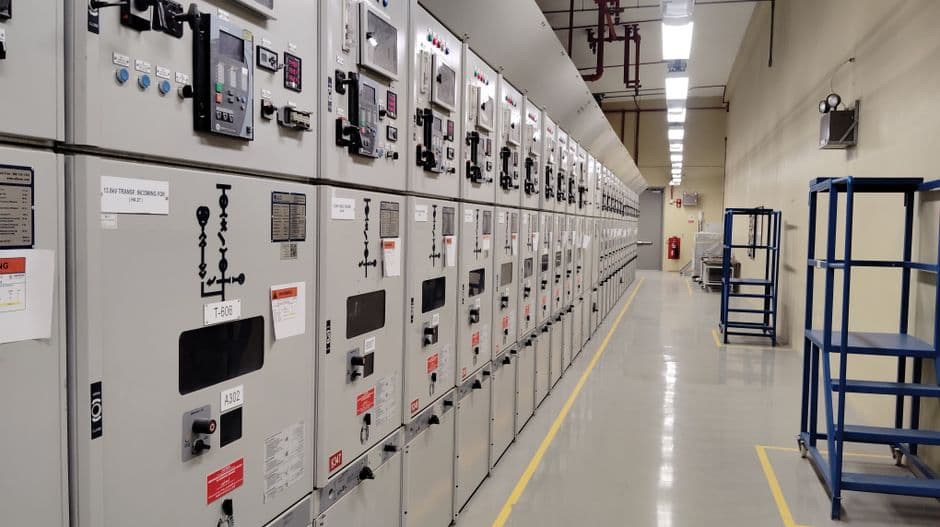
Most migrations begin because spares, software access, or support coverage are getting thin.
The length and shape of the shutdown is settled during discovery, by what is found in the existing I/O, comms and field wiring, well before any hardware is ordered.
Line-by-line or area-by-area migration is often easier to manage than a single full cutover.
In most Australian sites the trigger for a legacy PLC migration is not better performance. A line keeps running while spares get harder to source, the programming software runs only on an ageing PC or operating system, and the options for recovering from a fault keep narrowing. When the only spare is the card that failed, restoring a tripped line can take days instead of hours. Migration planning should begin while the site still controls the shutdown window.
For delivery support, see legacy PLC migration and automation upgrades and PLC, SCADA and HMI programming.
If a failed CPU or I/O card is now hard to source, the site is already exposed.
When the programming software only runs on one ageing laptop and one person knows the application, a single absence or hardware failure can leave the line without a recovery path.
Older controllers and HMIs often reach their limits once the site wants richer reporting, structured alarm handling, or integration with MES or higher-level systems. Planning the migration and the OEE monitoring and production data requirements together avoids a second change to the same code.
Spares and recovery problems arrive years before the hardware stops working, and that gap is what drives migration timing. The platforms most common on Australian sites have all passed their commercial peak.
On the Allen-Bradley side, the PLC-5 family and the SLC 500 with its 1746 I/O are both discontinued lines. Rockwell now positions ControlLogix and CompactLogix as the migration targets and publishes structured migration paths for these legacy controllers (Rockwell Automation, SLC 500 to CompactLogix migration). Spares for these ranges increasingly come from the grey market and refurbishment channels, where pricing and reliability are both unpredictable. Our guide to SLC 500 and PLC-5 end-of-life upgrades covers those two platforms in detail, using a real SLC 500 to CompactLogix churn migration as the example.
On the Siemens side, the dates are published. Siemens announced the phase-out of the SIMATIC S7-300 and the ET 200M distributed I/O in October 2023, standard deliveries ended on 1 October 2025, and spares and repair support run for roughly a decade beyond that. A line running S7-300 today is not in immediate danger, but it is on a defined clock, and the cost and lead time of spares climb well before the formal end of support.
The practical message is the same across both vendors: the right time to plan is when one card failure would turn into a sourcing problem, not when the platform is formally retired.
The first scoping decision is how much of the system changes in one window.
| Option | Best fit |
|---|---|
| Full replacement | Old hardware, old network, and difficult maintenance |
| Processor swap with retained I/O | Tight outages and healthy existing field side |
| Staged migration | Multi-line plants that cannot stop everything at once |
A full replacement usually takes the network with it. Legacy links such as DH+, DH-485 or PROFIBUS DP move to EtherNet/IP or PROFINET, which is the natural point to segment the control network and plan OT networks and secure remote access inside the same scope rather than as a later project. On process plants where the legacy system is a DCS or a mix of controllers, the choice of replacement architecture comes first; our guide to DCS vs SCADA vs PLC for process plants sets out the options. Ageing drives often reach end of life alongside the PLC, and the VSD upgrade guide covers replacing them without new motor or harmonic problems.
The longest part of many cutovers is re-terminating field wiring, so the wiring conversion approach is usually the single biggest lever on outage length. Wiring conversion systems exist specifically to avoid pulling every field conductor onto a fresh terminal block during the shutdown.
For Rockwell migrations, swing-arm wiring conversion modules and pre-wired conversion cables (the 1492 conversion system) are designed to land existing 1771 and 1746 field wiring directly onto 1756 ControlLogix I/O. The legacy I/O is removed, the new ControlLogix chassis goes in, and the pre-wired cables connect the field side through an interface module that maps the old terminal layout to the new I/O. Re-termination during the window is minimised, the point-to-point checking is reduced to the conversion interface rather than every field device, and the risk of a mis-landed wire under shutdown pressure drops accordingly.
This is not a universal substitute for inspection. The field wiring still has to be sound, the existing terminations still need checking, and any hand-modified or undocumented connections found during discovery will need to be resolved before the conversion hardware can be trusted. Where the field wiring is in good condition, though, a conversion system can turn what would have been a multi-day re-wire into a far shorter swap.
An automated converter gives a faithful structural translation, and the program still needs engineering work before it can run a live line. This is the step that most often gets underestimated in migration planning.
For Rockwell platforms, the Studio 5000 (formerly RSLogix 5000) Project Migrator converts PLC-5 or SLC 500 logic into a Logix project and does a competent job of the routine ladder. The areas that consistently need manual rework are well documented (DMC, converting PLC-5 to ControlLogix with the Project Migrator):
Siemens migrations carry their own version of this. Moving an S7-300 application toward newer platforms means reworking any logic that relied on the older addressing model, including ANY pointer parameters that must be re-expressed as VARIANT in the newer environment. As with the Rockwell tools, the converter handles structure and the engineer handles correctness.
Through a staged acceptance sequence, so that problems are found against simulation and test rigs rather than against product. Three stages do most of the work.
The converted program is exercised against simulated I/O before anything ships to site. Sequences, interlocks, alarms and edge cases are driven through a simulator so the bulk of the logic is proven off the critical path.
Once installed, the system is checked against the real hardware: I/O is verified point by point, field devices respond as expected, and the wiring conversion is confirmed before the line is handed back.
The line is tested where it meets upstream and downstream equipment, packaged units and higher-level systems, so interlocks and handshakes across boundaries are confirmed under realistic conditions.
IEC 62381 provides a common industry framework for the acceptance tests of automation systems, covering how FAT and SAT are structured and recorded (IEC 62381). Working to a recognised structure keeps the test scope, pass criteria and sign-off consistent, which matters most when several parties share responsibility for a cutover.
By breaking the changeover into defined steps with go/no-go decision gates and a written rollback at each one. The aim is that the line is never in an undefined state, and there is always a known position to return to if a check fails.
A workable cutover run sheet usually includes:
Staging line by line, or area by area, keeps each of these windows small and the rollback realistic. It is generally easier to prove and recover one line at a time than to attempt a whole-plant cutover in a single outage.
The cutover is electrical and plant work, so the safety and electrical standards that govern any such work on an Australian site apply in full. They are not optional extras layered on top of the controls task.
For the safety of the work itself, Safe Work Australia's guidance on managing the risks of plant covers isolation and energy control during maintenance and modification, including lockout and tagout of electrical, pneumatic, hydraulic and stored energy sources before anyone works on the equipment (Safe Work Australia, managing the risks of plant). Energy isolation should be planned into the cutover sequence rather than treated as a site formality.
For the electrical scope, two standards usually frame the work. AS/NZS 3000, the Wiring Rules, governs the electrical installation work around the new controller and field side. AS/NZS 61439 covers low-voltage switchgear and controlgear assemblies, which is the relevant standard where the migration touches or rebuilds control panels. Confirming which standards apply, and to which part of the scope, is part of discovery, not something to settle on the day of the outage.
Re-energising a process after a cutover is a process event as much as an electrical one, and treating it as such avoids damaging the plant on the way back up. Bringing pumps, valves and drives back to a live state in the wrong order can cause real harm.
The clearest example is water hammer. On CIP and product transfer lines, re-energising pumps and opening or closing valves out of sequence can create pressure surges that stress pipework, fittings and instruments. The restart should follow a defined order that establishes flow paths before pumps are loaded, opens and closes valves at controlled rates, and brings interlocks back to a known state before the line is asked to do real work. On a migrated line this matters even more, because the restart is the first time the new logic drives the real process under pressure rather than a simulator. Sequencing the restart is part of the engineering, not a step left to whoever is on shift.
This is where process understanding earns its place in a migration. A controls change that is electrically correct can still hurt the plant if the restart ignores how the process behaves, so the people planning the cutover need to read the line as a process, not only as I/O.
If one hardware failure would now create a sourcing or support problem, it is worth starting the migration plan before the site is forced into an outage. The migrations that run with the shortest outages and fewest surprises are the ones planned with enough lead time to stage the cutover line by line, prove the converted code through FAT, SAT and SIT, and rehearse the restart before the shutdown.
Modernise legacy PLC, SCADA, HMI and control infrastructure with staged cutover planning.
PLC logic, SCADA architecture, HMI upgrades, fault finding and historian integration for production sites.
PLC and SCADA fault finding, planned maintenance and production breakdown support for Melbourne and regional sites.
Automation, traceability, CIP, SCADA and production data for Australian food and beverage plants.
How to choose a control architecture for an Australian process plant, expansion or migration.
When a variable speed drive saves energy, how to build the case and how to replace an ageing drive.
Upgrading SLC 500 and PLC-5 systems to CompactLogix and ControlLogix: routes, code conversion, HMIs and the Bulla churn case study.
SLC 500 end-of-life upgrade to CompactLogix PLCs, I/O and HMIs for two ice cream churns, completed in a one-week shutdown.
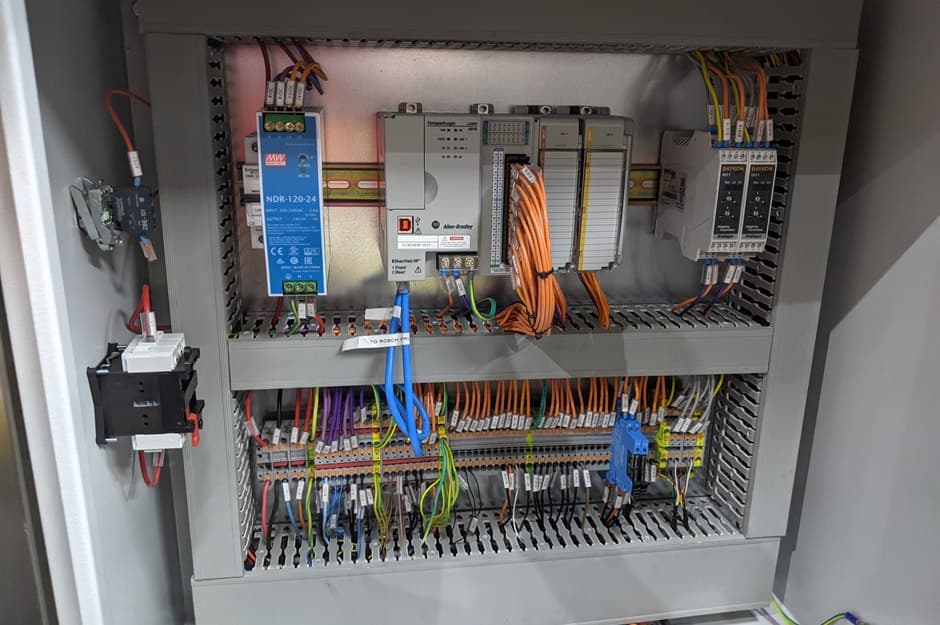
How to plan an SLC 500 or PLC-5 upgrade to CompactLogix or ControlLogix on a live Australian plant, with a real SLC 500 churn migration as the worked example.
Key point
Both platforms are past their production life
Published 25 Sept 2026
Buyer guide to PLC programming in Melbourne: process-first design, modular code, language choice, diagnostics, FAT discipline and operator support.
Key point
Process understanding comes before code
Published 7 Apr 2026
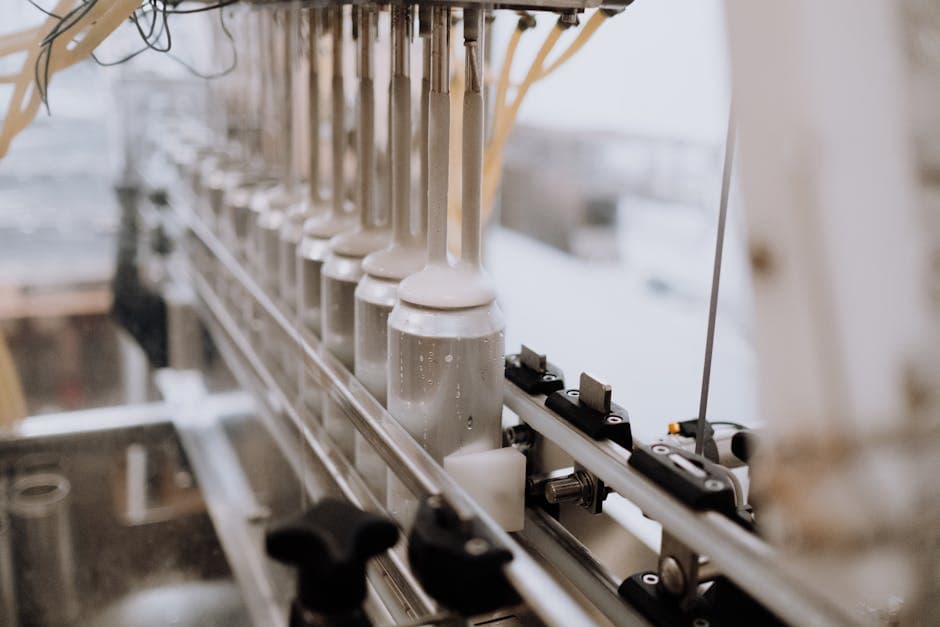
Practitioner guide to scoping industrial automation for Melbourne manufacturers: control stack scope, greenfield versus brownfield, and choosing an integrator.
Key point
Scope from the operating constraint
Published 8 Apr 2026
Tell Metromotion Controls about the work you are planning and speak with an engineer about the next steps.