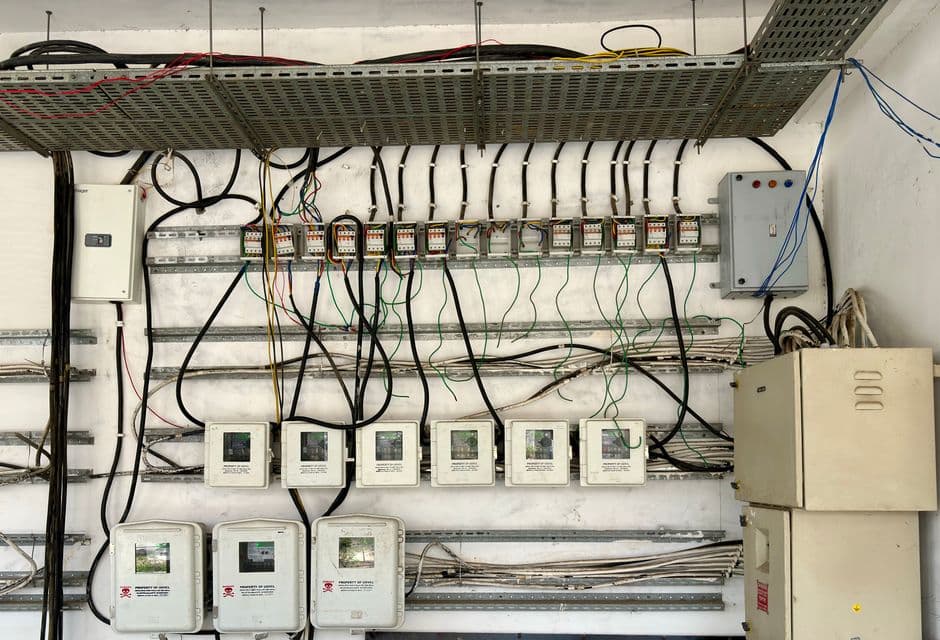
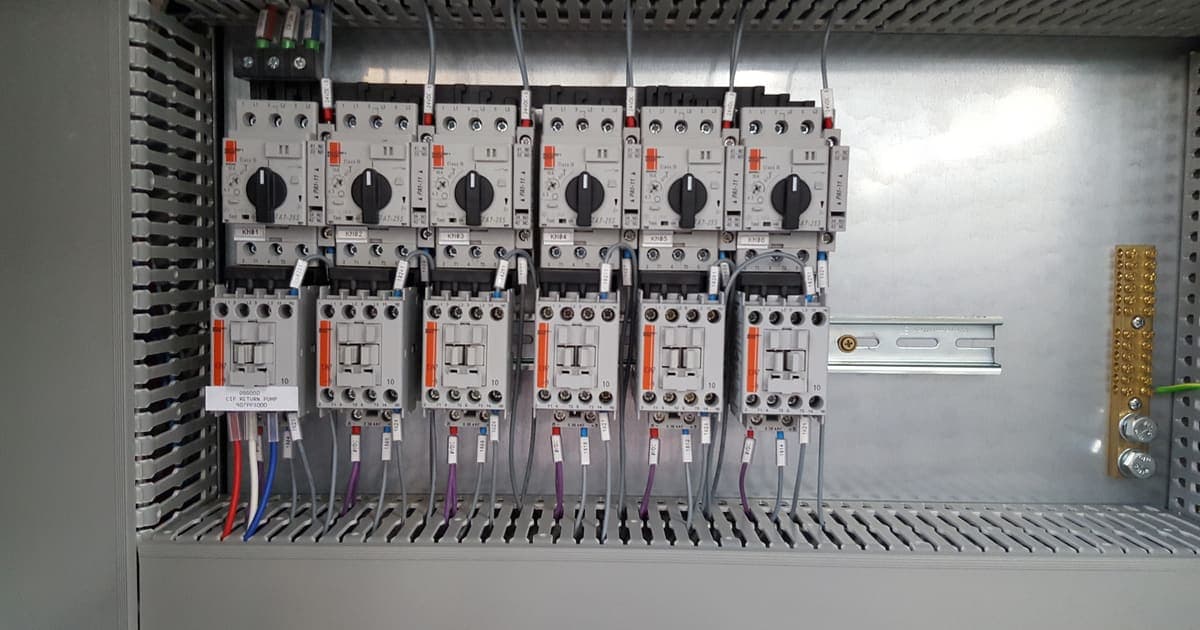
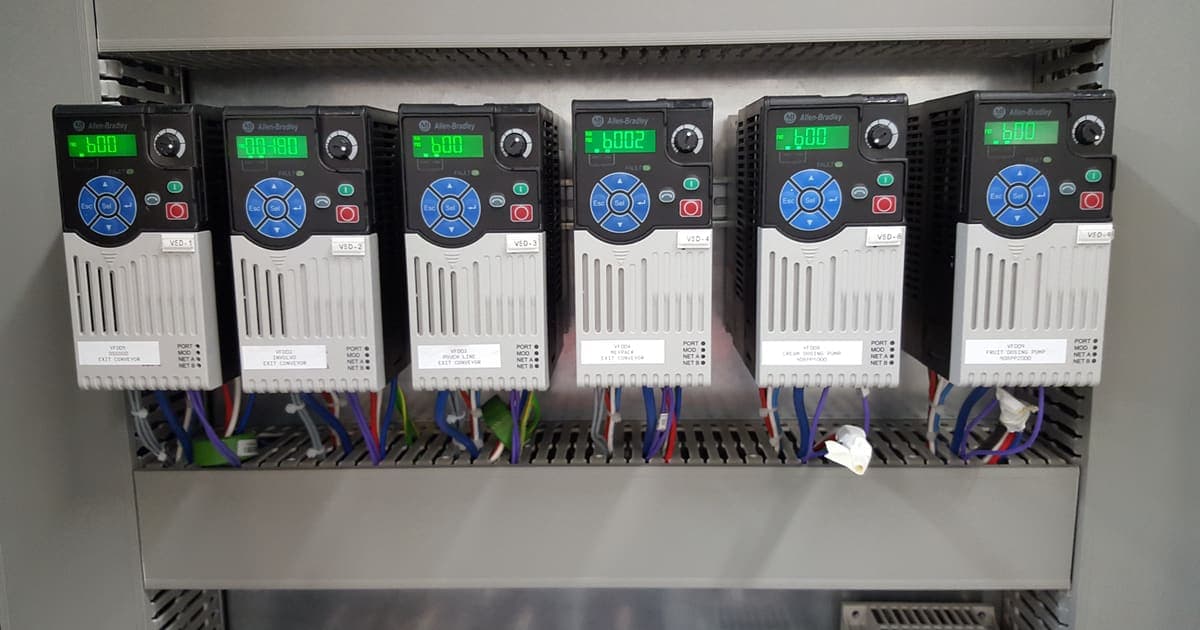
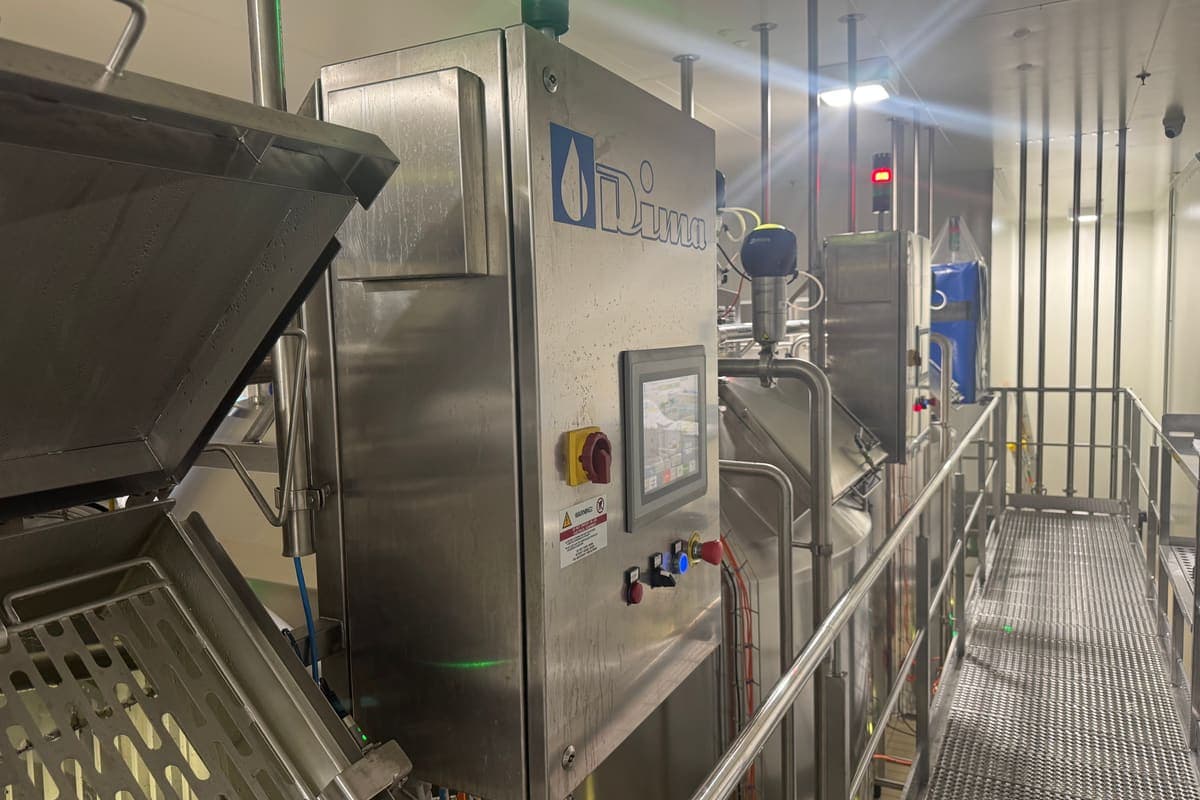
Control panel engineering in Australia is the discipline that turns a control philosophy into a compliant, buildable and supportable electrical assembly. A weak panel package tends to surface the same way every time, during workshop build or at startup, when a gap in the drawings or a missed rating turns into rework on the critical path.
This article sets out how a control panel or switchboard is engineered to the Australian standards, where the international series sits, and the decisions that shape the enclosure before component selection finishes. For delivery support, see control panel engineering Melbourne, PLC programming Melbourne and industrial automation Melbourne.
The standards that frame the work
Two standards do most of the framing for low-voltage control panels and switchboards in Australia.
AS/NZS 61439 covers low-voltage switchgear and controlgear assemblies and is the Australian and New Zealand adoption of the IEC 61439 series, so an assembly verified against the international standard maps closely to the local requirement. Part 1 carries the general rules that apply to every assembly, and the application parts cover specific types such as power switchgear and controlgear assemblies and distribution boards. The standard sets the requirements for design verification, temperature rise, short-circuit withstand, dielectric properties, protection against electric shock and the construction of the assembly. The official texts are available through the IEC and Standards Australia.
AS/NZS 3000, the Wiring Rules, governs the electrical installation itself: the wiring, protection and earthing that the assembly connects into. Where AS/NZS 61439 governs the assembly as a product, AS/NZS 3000 governs how that product is installed and connected on site. Both apply to most jobs, and confirming which standard covers which part of the scope is design work, not a question to settle during inspection. For a designer's view of AS/NZS 61439, including who is responsible for design and routine verification and the ratings a specification must state, see our AS/NZS 61439 guide for switchboards and control panels. Main switchboards and motor control centres are covered by our switchboard and MCC design service, where Metromotion Controls designs the assembly and partner builders fabricate it.
Other standards reach into the scope depending on the plant: functional safety where the panel implements safety functions, electromagnetic compatibility where drives and sensitive electronics share an enclosure, and the Work Health and Safety duties for plant that cover the construction and maintenance work itself. Identifying the full set during design matters because each one is far cheaper to build in than to retrofit.
Design verification: from type-tested to verified assemblies
A recurring source of confusion is the older terminology of type-tested assembly (TTA) and partially type-tested assembly (PTTA). The current IEC 61439 and AS/NZS 61439 framework retired that language and replaced it with the concept of design verification.
Under the current standard an assembly's design is verified against a defined list of characteristics by one of three routes: testing, comparison by calculation or measurement against a tested reference design, or strict design rules where the standard permits them. The standard also separates the original manufacturer, who establishes the verified design and its limits, from the assembly manufacturer, who can rely on that verification provided the build stays inside the documented limits for ratings, layout and components.
Whichever route is used, the manufacturer has to demonstrate that the finished assembly meets the verified characteristics: temperature rise, short-circuit withstand, dielectric strength, protection against shock and the rest. That evidence belongs in the documentation. An assembly that cannot show its verification basis is difficult to defend at inspection or after an incident.
Form of separation describes how the inside of an assembly is divided by barriers between the busbars, the functional units and the terminals. It directly shapes the enclosure and is best agreed with the asset owner before the layout is fixed.
The forms run from Form 1, with no internal separation, to Form 4, which separates the busbars from the functional units and each functional unit from every other, including its terminals. The intermediate forms are further divided into types depending on where the terminals sit. Higher forms let a fault or a maintenance task be contained to one section while adjacent sections stay live, which matters on plant that cannot tolerate a full board shutdown for routine work.
Each step up in separation adds barriers, gland plates and space, so a Form 4 board is larger and more expensive than a Form 2 board of the same rating. The right choice follows from how the plant will operate and maintain the board. A continuous line that needs to isolate one motor circuit while the rest of the board stays energised has a genuine case for a higher form; a small machine panel that is only worked on when the whole machine is shut down rarely does.
Worked example: sizing and segregation for a motor control centre
The figures below are typical engineering values for an illustrative motor control centre, used to show the method rather than report a client result.
Take an MCC feeding a mix of direct-on-line starters and variable speed drives, with an incoming supply where the electrical study reports a prospective short-circuit current of 35 kA. The assembly's rated conditional short-circuit current, set by the incoming protective device and the busbar bracing, has to cover at least that figure, so the busbars are braced and the incoming device selected against 35 kA.
Thermal load drives the next decision. Drives typically dissipate 2 to 3 percent of their throughput as heat, so the drives, control transformers and densely packed terminals can add up to a few kilowatts inside the enclosure. That load is checked against the enclosure surface area, the site ambient temperature and the IP rating. An IP54 enclosure in a warm plant room with several kilowatts of internal dissipation will usually need filtered forced ventilation, or a closed-loop cooling unit where the IP rating has to be maintained against dusty or washed-down plant air.
Segregation follows from operation and maintenance. If the plant needs to isolate one drive section while the rest of the line keeps running, the example points toward a higher form of separation so a maintainer can open one compartment with the adjacent functional units still live and barriered. If the whole line stops for any intervention, a lower form is appropriate and considerably cheaper. Either way the decision is agreed and documented, so the build matches how the site will use the board. This reasoning sits at the centre of control panel engineering and feeds the broader systems integration scope.
Short-circuit rating, IP and the ratings that cannot be guessed
Several ratings are inputs to the panel rather than choices made at the panel, and treating them as inputs is what keeps an assembly compliant.
The short-circuit current rating has to match the prospective fault current available at the assembly's point of connection. That figure comes from the upstream supply and protective devices in the electrical study, and the busbars, bracing and incoming device all have to be coordinated to it. Under-rating an assembly against the available fault current is a serious safety failure, because the assembly is then not verified to survive the fault it could actually see.
The IP rating, defined in IEC 60529, describes the enclosure's protection against solid objects and water ingress, and it follows from the environment. A clean control room differs sharply from a washdown area in a food plant, where higher ingress protection and stainless construction are common. The IP rating interacts directly with thermal management, because a sealed enclosure that keeps water out also keeps heat in, so the cooling method is solved together with the ingress requirement rather than after it.
Arc flash belongs in the same group. The energy released by a fault arc depends on the fault current and the clearing time of the upstream protection, and the exposure influences how an assembly is maintained, labelled and accessed. It is another reason the fault current and protection coordination from the electrical study cannot be treated as someone else's problem; the practical handling on Australian sites sits within the Work Health and Safety duties for plant.
Thermal management and heat dissipation
Every device inside an enclosure dissipates heat, and the internal temperature rise has to stay within the limits the components and the assembly are rated for. Thermal management is therefore a calculation done early, not a problem discovered when the panel runs hot.
The method is to estimate the total internal dissipation from device data, drives, transformers, power supplies, contactors and terminations under load, then balance it against what the enclosure can shed through its surface at the site ambient temperature. Where the balance fails, the options are a larger enclosure, filtered forced ventilation, or a closed-loop cooling unit such as an air conditioner or heat exchanger where the IP rating must be preserved. Each option has consequences for size, maintenance and ingress protection, so the choice is deliberate.
A panel that runs hot suffers shortened component life, nuisance trips and derated equipment, and the fix after build is always more disruptive than the calculation at design. Drives are concentrated heat sources, and a row of them in one enclosure usually decides the cooling method on its own.
Documentation, EPLAN and the build package
The drawing set is the backbone of a control panel job. A clear, internally consistent set means the workshop builds the panel once, the tester checks against a document that matches the build, and the site receives records it can use.
Electrical design software such as EPLAN produces the schematics, terminal plans, cable schedules and bills of materials from one data model, so a change to a device propagates through the connected documents instead of being edited in several places by hand. The schematic, the terminal plan, the cable schedule and the bill of materials then describe the same panel, and the cross-references hold. The same discipline supports the wider industrial automation scope, where panel documentation has to line up with the control system it serves, from food and beverage lines to building products plants.
A complete build package includes the power and control schematics, the general arrangement, the terminal and cable schedules, the bill of materials with part numbers, and revision control so everyone works to the current issue. A panel built to one revision while the tester works to another wastes workshop time and undermines trust in the whole set.
Panels that carry managed switches, firewalls or remote-access gateways need the network documented alongside the power and control drawings: IP addressing, VLANs, which ports are enabled and how vendor access is controlled. That is where the panel package meets OT network design and secure remote access. The same applies when the panel feeds a historian or line dashboard, where the tag list and communication paths belong in the package so OEE monitoring and production data collection can be added later without rewiring or reworking the drawings.
Factory acceptance testing and handover records
A control panel is proven before it leaves the workshop and documented so that it can be supported long after.
The factory acceptance test (FAT) is the structured check of the assembled panel before dispatch. A sound FAT covers a continuity and point-to-point check against the schematics, insulation and dielectric verification, a controlled power-up sequence, functional checks of the control and safety circuits, confirmation of labelling and ratings, and a defect list that is closed out before sign-off. Running the FAT against the same documents that will be handed over keeps the test honest, because any mismatch between the drawings and the panel is found in the workshop rather than on site.
The handover records are where a panel either retains its value or quietly loses it. A strong package contains the as-built schematics and general arrangement, the terminal and cable schedules, the final bill of materials with part numbers, the FAT records and defect closeout, the ratings information, and maintenance notes including recommended spares. These records are what a maintenance team or a future integrator relies on to work safely on the panel years later, and they feed directly into ongoing support and any later automation upgrades.
Australian context: standards, regulators and local practice
AS/NZS 61439 and AS/NZS 3000 are published through Standards Australia, and the assembly standard tracks the IEC series, so internationally verified designs map cleanly onto local requirements. Working to the current editions, and confirming which parts apply to the specific assembly, is the baseline for compliant panel engineering in Australia.
The safety of the construction, installation and maintenance work sits under the Work Health and Safety framework. Safe Work Australia's guidance on managing the risks of plant covers the duties around design, isolation, energy control and safe maintenance of plant including electrical assemblies, and energy isolation and lockout belong in the plan for any work on a live or recently live assembly rather than being treated as a site formality.
The installation work that connects an assembly is licensed electrical work, which is where AS/NZS 3000 and AS/NZS 61439 meet. Keeping that boundary clear in the documentation, so it is obvious what the panel manufacturer verified and what the installer is responsible for, avoids gaps at the handover between trades.
Common mistakes and how to avoid them
A handful of pitfalls account for most of the trouble on control panel jobs.
- Treating compliance as a final check. Addressing AS/NZS 61439 and AS/NZS 3000 only at inspection turns gaps in verification, separation or ratings into rework.
- Under-rating the short-circuit performance. Choosing busbars and an incoming device without coordinating to the prospective fault current from the electrical study leaves an assembly that is not verified for the fault it could see.
- Underestimating heat. Counting components without calculating dissipation leads to undersized enclosures and panels that run hot, trip and derate. The thermal calculation should size the enclosure, not the other way around.
- Choosing form of separation by default. Picking a form without agreeing how the plant will operate and maintain the board either overspends on unnecessary separation or leaves the site unable to work safely on a live board.
- Weak revision control. Building to one revision while testing or installing to another wastes workshop and site time.
- Thin handover. A sound panel with out-of-date drawings, no cable schedule or no FAT record becomes hard to support, a cost the site carries for years.
Bringing it together
Control panel engineering in Australia rewards decisions made early. The applicable standards, the short-circuit and IP ratings, the form of separation and the thermal load all shape the enclosure before component selection finishes. A package that builds compliance in from the first layout, sizes the enclosure against a real thermal calculation, and hands over complete as-built records saves time in the workshop, on site and through the life of the asset. For panels designed, built and tested in Melbourne, see our control panel design and engineering service.