1
Both platforms are past their production life
Rockwell lists the PLC-5 as discontinued and points SLC 500 users to CompactLogix 5380. Spares now come mostly from repair, refurbishment and the grey market.
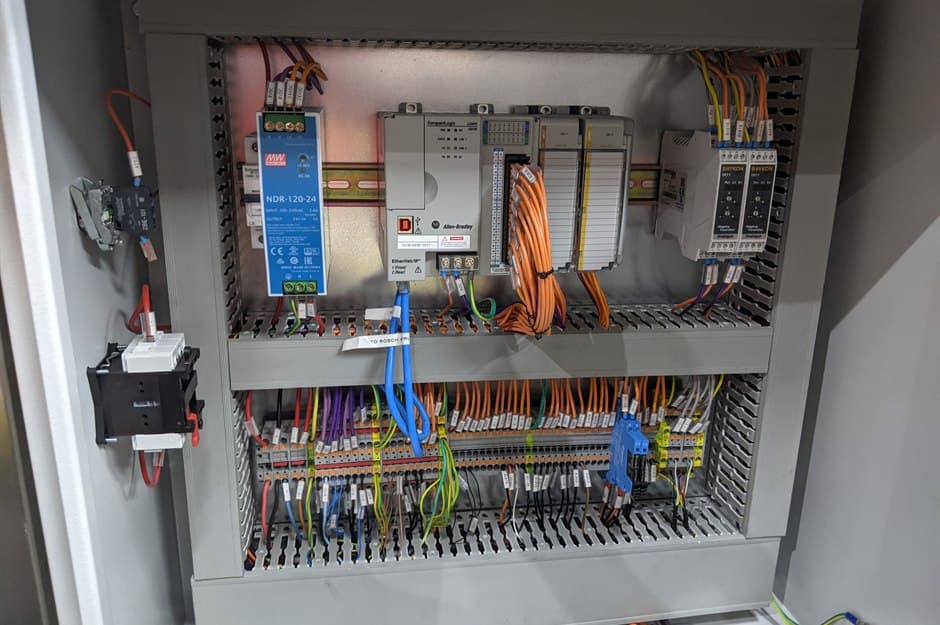
Rockwell lists the PLC-5 as discontinued and points SLC 500 users to CompactLogix 5380. Spares now come mostly from repair, refurbishment and the grey market.
Full replacement, controller-first with retained I/O, and staged migration each suit different outage windows and field wiring conditions.
The Project Migrator gives a faithful structural translation. Timers, status bits, indirect addressing and analogue scaling still need review before the logic runs a line.
Allen-Bradley SLC 500 and PLC-5 controllers still run a large share of Australian production lines: churns, boilers, conveyors, mixers and packaging machines installed in the 1990s and 2000s that have simply kept working. The controller is rarely what fails first. The pressure arrives from the edges: a 1746 or 1771 card that takes weeks to source, a DH+ interface card that only fits one old PC, and RSLogix 500 or RSLogix 5 running on a laptop nobody dares to update. This guide covers how to plan the upgrade to CompactLogix or ControlLogix while the site still chooses the shutdown, and uses a real SLC 500 churn migration as the worked example.
For delivery support, see PLC and automation upgrades and PLC programming in Melbourne. For the general migration method across vendors, read our guide to legacy PLC migration in Australia.
Rockwell Automation states that the PLC-5 family is discontinued and directs users to ControlLogix, and it positions CompactLogix 5380 as the migration path for SLC 500 systems (Rockwell Automation, PLC-5 to ControlLogix migration; SLC 500 to CompactLogix 5380 migration). Repair and remanufacturing services remain available, so a running system is not suddenly unsupported. What changes is the recovery path when something fails.
In practice that shows up in four places:
Individual catalogue numbers move through lifecycle stages at different times, so check the status of every processor, I/O module, adapter and HMI on site against Rockwell's product lifecycle information during discovery rather than assuming one date for the whole system.
The usual mapping follows size and architecture rather than brand loyalty.
| Legacy platform | Typical target | Why |
|---|---|---|
| SLC 500 (5/01 to 5/05), 1746 I/O | CompactLogix 5380 or 5069 I/O | Similar scale and panel footprint, EtherNet/IP built in, Rockwell's published SLC migration path |
| PLC-5, local 1771 I/O | ControlLogix 1756 | Chassis-based architecture, larger I/O counts, redundancy options |
| PLC-5 with Remote I/O drops | ControlLogix with EtherNet/IP remote I/O | Replaces RIO and DH+ with a supportable network |
| Small SLC or MicroLogix machine controls | CompactLogix or Micro800, depending on the machine | Keeps the replacement proportionate to the machine |
All Logix controllers are programmed in Studio 5000 Logix Designer, which also changes how the application is organised: tag-based data instead of numbered data files, tasks and programs instead of a single scan of ladder files, and add-on instructions for reusable device logic. That change is an opportunity to make the code easier to support, provided it is planned rather than left to the converter.
The route decides how long the line is down, how much field wiring is touched and how much risk sits in the cutover.
New controller, new I/O and a new network in one window. Best when the panel, wiring and network are all tired, or when the outage is long enough to test everything properly. Wiring conversion hardware can shorten the re-termination work considerably.
A Logix controller replaces the processor while the existing I/O stays in service through a network adapter or scanner. It shortens the first outage and moves the logic onto a supported platform, then the I/O is replaced in later windows. The bridging modules have lifecycles of their own, so check them before relying on this route.
Each machine or line is migrated in its own window. Suits sites with several near-identical assets, such as multiple churns, fillers or conveyors, where the first migration proves the method and later ones reuse it.
For the field side, Rockwell's 1492 wiring conversion systems use pre-wired cables and interface modules so existing field wiring does not have to be removed during the I/O change. Where the wiring is sound, that is usually the single biggest lever on outage length. Where discovery finds hand-modified or undocumented terminations, those have to be resolved first, because the conversion hardware assumes the old terminal layout is what the drawings say it is.
The Project Migrator in Studio 5000 converts an exported RSLogix 500 or RSLogix 5 project into a Logix project. It keeps the ladder structure and turns data files into arrays, so N7:10 becomes N7[10] and timers become arrays of TIMER structures. Anything it cannot translate cleanly is flagged, usually with a PCE instruction that marks the rung for review. The areas that consistently need engineering attention are:
There are three reasonable ways to treat the converted code. A straight port keeps the converted structure and fixes only what the converter flagged. A hybrid ports the proven logic, then simplifies and comments it where it matters most, so the result is easier to navigate without re-engineering behaviour that already works. A rewrite suits systems where the process has changed, the old code is unsupportable, or the upgrade adds new functionality that the old structure cannot carry. The hybrid is often the best balance of cost and maintainability, and it is the approach used in the example below.
The controller is rarely alone. Older PanelView terminals, SCADA servers and other PLCs usually read the SLC or PLC-5 over DH+, DH-485 or serial links using file addresses. When the controller changes, every one of those connections changes with it.
Bulla's ice cream churns ran on SLC 500 PLCs and I/O that were approaching obsolescence, on equipment central to production rather than a peripheral system. Rather than wait for a failure to force an unplanned shutdown, Bulla moved proactively to replace the controls on two churns with CompactLogix PLCs, I/O and new PanelView HMIs.
Three lessons carry over to most SLC 500 upgrades. First, "identical" machines rarely are, so each one gets its own I/O check and its own test record. Second, the upgrade is the cheapest time to fix the operating model around the code, which here meant recipe management that fits the way the churns are run today rather than the way they were specified. Third, the cutover exposes adjacent systems: during Bulla's shutdown, commissioning support extended to refrigeration system issues that surfaced during cutover. Spares holding costs fell by around a third under CompactLogix compared with sourcing parts for the obsolete SLC 500 system. The full case study is on the Bulla SLC 500 to CompactLogix churn upgrade page.
Many SLC 500 and PLC-5 systems sit inside equipment built by an OEM: boilers, ovens, packaging machines and process skids. The end user owns the problem, but the OEM often owns the code, the drawings and the support relationship. For an OEM, the upgrade has a second goal beyond one site: a migrated program that becomes a consistent baseline for every new installation. That was the brief for Steamtech's legacy boiler PLC migration, where legacy boiler programs were moved onto a current CompactLogix and PanelView platform and verified through structured I/O testing before commissioning at end-customer sites.
If one failed SLC or PLC-5 card would now mean days of sourcing, the upgrade is already overdue for planning. Starting early lets the site pick the route, prove the converted code in FAT and schedule the cutover into a planned shutdown rather than a breakdown. To discuss an SLC 500 or PLC-5 upgrade on your plant, contact Metromotion Controls.
Modernise legacy PLC, SCADA, HMI and control infrastructure with staged cutover planning.
PLC programming, troubleshooting, commissioning and legacy migration for Melbourne production sites.
SLC 500 end-of-life upgrade to CompactLogix PLCs, I/O and HMIs for two ice cream churns, completed in a one-week shutdown.
Legacy boiler PLC programs migrated to CompactLogix for an OEM, verified through I/O testing and commissioned at end-customer sites.
Controls for yoghurt and cheese plants, milk receival, pasteurisation, CIP and production reporting.
Planning an upgrade without losing production on a live Australian manufacturing site.
Upgrading AVEVA Plant SCADA or Geo SCADA in place, or migrating to Ignition, with a staged cutover that keeps operators in control.
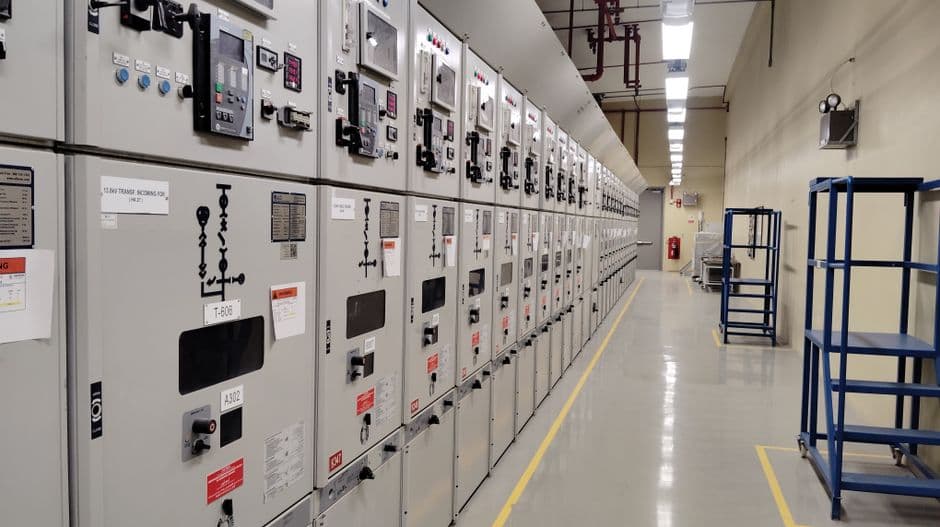
How to plan a legacy PLC migration on a live Australian plant: when to start, how to scope the outage window, and how to stage the cutover.
Key point
Plan before spares and recovery become urgent
Published 9 Apr 2026
Buyer guide to PLC programming in Melbourne: process-first design, modular code, language choice, diagnostics, FAT discipline and operator support.
Key point
Process understanding comes before code
Published 7 Apr 2026
Choosing a PLC platform for an Australian plant comes down to a few practical considerations: native communications protocols, local spares, the right model in the range, local integrator support, and what your own team is comfortable using.
Key point
The platform has to fit your plant, not win on paper
Published 3 June 2026
Tell Metromotion Controls about the work you are planning and speak with an engineer about the next steps.