Boiler and steam plant PLC migration
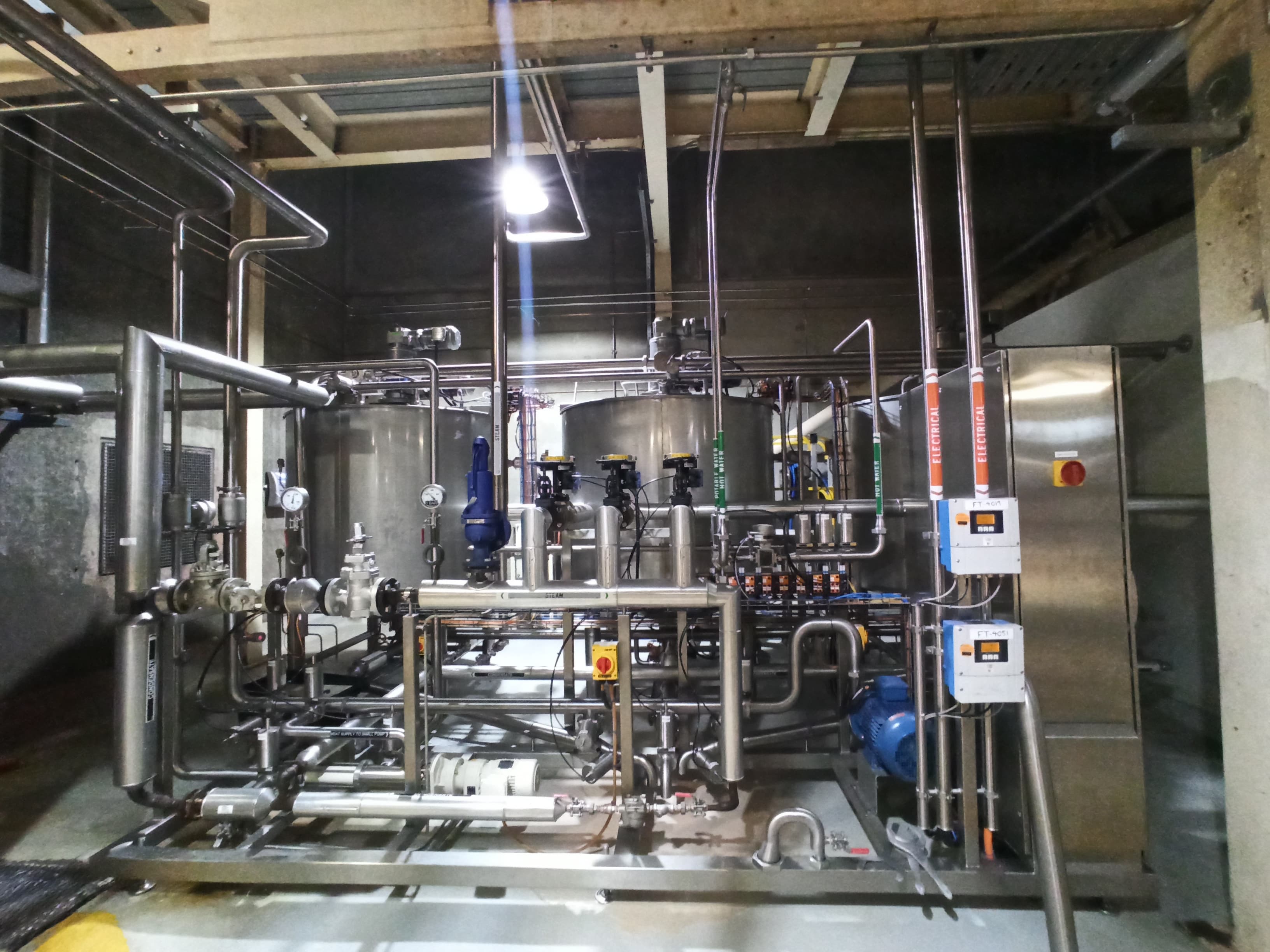
For Steamtech Engineering, legacy boiler PLC programs were migrated to current platforms and verified through structured I/O testing for repeat OEM deployment.
Metromotion Controls designs, programs and supports process control systems for chemical, process and utility plants across Melbourne, Victoria and Australia, working from the P&ID to PLC, SCADA, historian and switchboard design.
Process plants are controlled differently from packaging lines. The work is dominated by regulatory loops, interlocks, sequences that move material between vessels, and utilities that every other area depends on. Metromotion Controls reads the P&ID the way the process behaves, then designs the PLC and SCADA architecture, the loop strategy and the alarm philosophy around it, with PLC programming, historian data and switchboard and MCC design delivered by one team.
Most Australian process sites run a mix of PLCs, SCADA and sometimes a legacy DCS. We work across Rockwell, Siemens, Ignition, AVEVA and Citect, and our guide to DCS vs SCADA vs PLC for Australian process plants sets out how to choose the right architecture before a migration or expansion.
Temperature, pressure, level, flow and ratio loops drift as equipment, product and throughput change. Poorly tuned loops show up as oscillation, off-spec product, wasted energy and operators running in manual.
Older controllers and control-room software become hard to support, spares grow scarce and knowledge sits with a few people. Replacing them has to happen around campaigns, shutdowns and a plant that cannot stop for long.
Boilers, steam, hot water, chilled water, compressed air and effluent systems are rarely the focus of investment, yet a trip in any of them stops production across the plant.
Process upsets generate cascades of alarms. Without rationalised priorities, trends and clear sequence status, operators cannot see what started the upset or what the plant needs from them.
We start with the P&ID and a walk of the plant, then write the control philosophy: how each unit starts, runs, holds and shuts down, which loops are regulatory and which are sequential, and what the interlocks protect. Loops are designed to their dynamics, with PI control on fast flow and pressure loops, full PID with anti-windup on slow thermal loops, ratio and flow-paced control for blending and chemical dosing, and averaging level control where a tank should absorb variation rather than pass it downstream.
Sequences and batch operations are structured to ISA-88 where the process calls for it, so recipes, phases and equipment modules are reusable and testable. PLC programming covers continuous control, sequencing, permissives and trip logic, with safety instrumented functions kept distinct and engineered through our functional safety service where the risk assessment requires them.
SCADA and historian design gives operators rationalised alarms, process trends and sequence status, and gives engineers the data to tune loops and track energy and utility use. We work in Ignition, AVEVA, Citect and FactoryTalk, and design the historian so process data can support reporting without rework.
Power and field infrastructure is designed with the control system rather than after it. That covers control panels, switchboard and MCC design to AS/NZS 61439 with fabrication by partner builders, drive selection for pumps and fans, and OT networks with secure remote access for support.
Upgrades are staged around campaigns and shutdowns, with source-code review, simulation, FAT, cutover run sheets and rollback points, so a legacy PLC, SCADA or DCS node can be replaced without turning the outage into an open-ended fault-finding exercise.
For Steamtech Engineering, legacy boiler PLC programs were migrated to current platforms and verified through structured I/O testing for repeat OEM deployment.
For Patties Foods, closed-loop hot water temperature control and PLC-managed cycle timing held set point and dwell consistently run to run.
For McCormick, a production-critical CIP system was migrated to Ignition SCADA with distributed control architecture and multi-terminal operator access.
For La Casa del Formaggio, the process control scope covered 30 PID loops, 3 Motor Control Centres, 21 PowerFlex525 VSDs and an Ignition application.
Process plants need control platforms that support stable regulatory control, long asset life and clear diagnostics for the site team.
Rockwell ControlLogix and CompactLogix, Siemens S7 and TIA Portal for process control and sequencing.
Ignition, AVEVA, Citect and FactoryTalk SCADA with historian and reporting.
Instrumentation, analysers, drives and valve integration over EtherNet/IP, Profinet, Modbus and OPC UA.
Switchboards, MCCs and control panels designed to AS/NZS 61439 and fabricated by partner builders.
Yes. The control problems are shared: regulatory loops, interlocks, sequencing, batch control and utilities. Metromotion Controls applies the same process control discipline to chemical blending and dosing, boilers, steam, hot water and plant utilities that it applies on dairy and beverage sites.
It depends on the size of the plant, how tightly units interact, the support model and the installed base. Many mid-size Australian plants run PLCs with SCADA and a historian, while large integrated plants often justify a DCS. Our DCS vs SCADA vs PLC guide sets out the trade-offs.
Usually. We review the existing code and I/O, simulate the new system, run FAT and plan the cutover with rollback points, so the replacement fits a planned shutdown or is staged unit by unit.
We design them. Metromotion Controls prepares switchboard and MCC designs to AS/NZS 61439, and partner switchboard builders fabricate them. We review shop drawings, witness FAT and support installation.
Yes. We review loop behaviour from trends, check the instrument and final control element first, then retune to the loop dynamics and document the settings so the site can maintain them.
Melbourne automation contractor capability for scoped control-system projects from design through commissioning.
PLC logic, SCADA architecture, HMI upgrades, fault finding and historian integration for production sites.
Industrial switchboard and MCC design to AS/NZS 61439, with fabrication by partner switchboard builders.
Functional safety assessment, SIL determination, safety instrumented functions and machine safety to IEC 61508, IEC 61511 and ISO 13849.
OEE, reports, quality, CIP, maintenance and energy data from the team that builds and programs the lines.
Modernise legacy PLC, SCADA, HMI and control infrastructure with staged cutover planning.
Legacy boiler PLC programs migrated to CompactLogix for an OEM, verified through I/O testing and commissioned at end-customer sites.
Fit-for-purpose temperature and cycle control for a hot water set forming and cooking process.
CIP automation and Ignition platform work for factory automation upgrades.
How to choose a control architecture for an Australian process plant, expansion or migration.
How an experienced team reads a P&ID and a short conversation and turns it into sequences, interlocks and control loops.
Why most flow, pressure and level loops run PI, why slow thermal loops justify full PID with anti-windup, and a structured lambda method over trial and error.
A practical guide to ISA-88 batch control covering the procedural model, equipment mapping and traceability.
When a variable speed drive saves energy, how to build the case and how to replace an ageing drive.
A designer's guide to responsibilities, ratings, design and routine verification and FAT evidence under AS/NZS 61439.
Tell us the site change, upgrade or support requirement. We'll review the scope, timing and technical constraints and respond with a clear next step.