Platforms and vendors
- Ignition
- Citect SCADA
- Rockwell
- SQL databases
- MySQL
- Report packs and PDF export
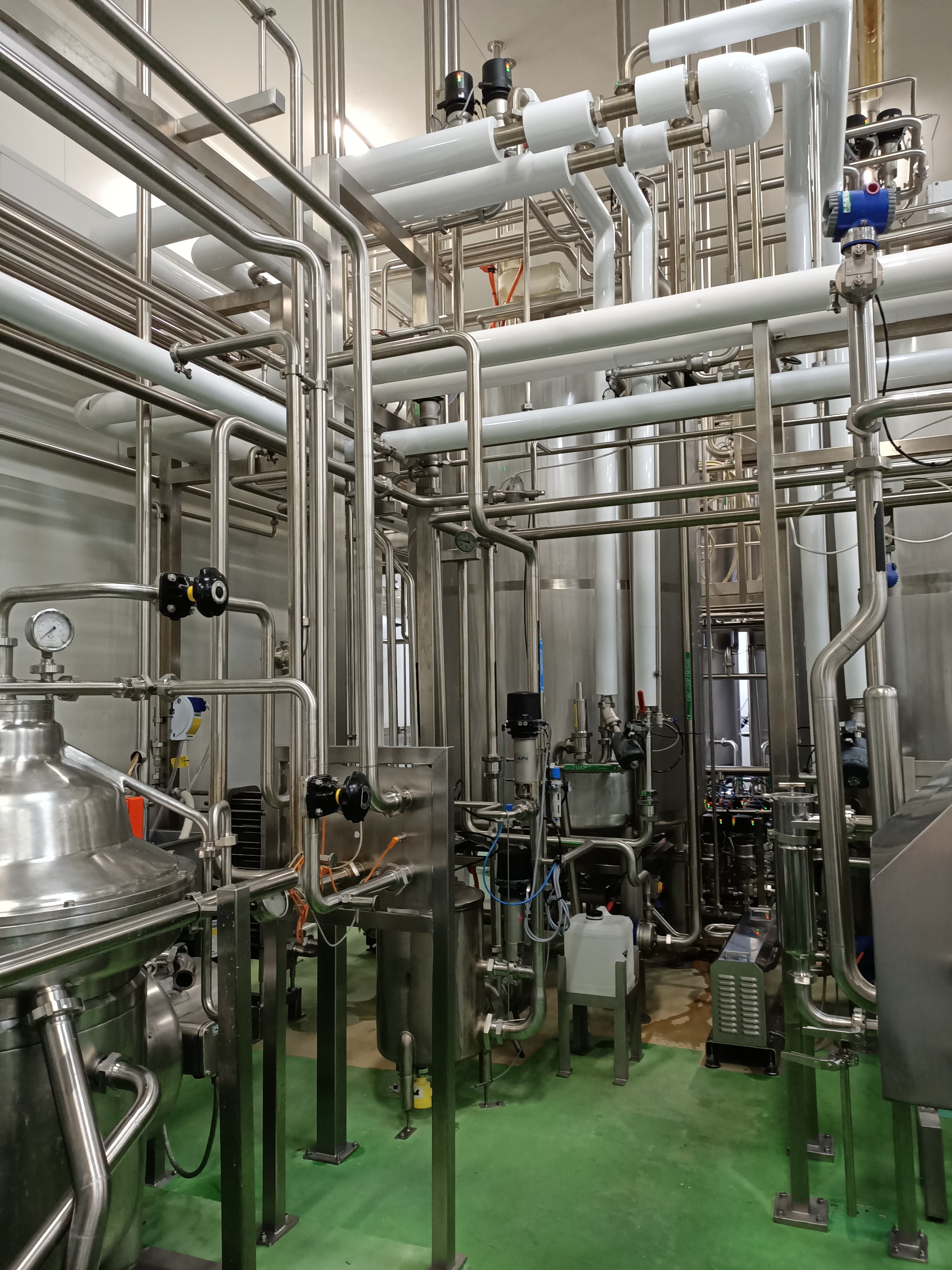
Metromotion Controls builds clean-in-place (CIP) verification and critical control point (CCP) monitoring records from the control systems that run them, logged per cycle and per batch, with alarms and deviations recorded and ready to show an auditor.
Food safety records in many plants still depend on chart recorders, printouts and hand-written logs that someone has to check, sign and file. The CIP set and the pasteuriser already measure what the record needs. Metromotion Controls has programmed CIP systems and validated CIP sets across dairy and food sites, and we capture those records directly from the control layer so each cycle and each batch has a complete, time-stamped record. We provide the control-system records; your HACCP plan, certification and audits stay with your food safety team and certifier.
A CIP record is evidence that a circuit was cleaned the way the validated recipe says it should be. It should be complete without anyone adding to it, and it should show a failure as clearly as a pass.
Critical control points in a food plant are usually a temperature held for a time: a pasteuriser holding tube, a cooker, a retort, a chiller or a blast freezer. The control system already measures them. We log each CCP continuously against its critical limit, alarm on a deviation, and record the corrective action and sign-off against the batch, so the monitoring record and the deviation record live in one place.
Paper and paperless chart recorders do one job: prove a value stayed within limits. A logged record in SCADA or SQL does the same job and more. It can be searched by batch, it raises an alarm when a limit is crossed, and it cannot be misplaced. We migrate chart-recorder points into the control system with the same channels, ranges and retention the site food safety plan requires, and keep the old recorder running in parallel until the new record is accepted.
At Lactalis, our engineers validated CIP sets step by step across six dairy sites so cleaning sequences met hygiene requirements before lines returned to product. The same discipline applies to every CIP change: the sequence is tested against the recipe, the record is checked against the measured values, and the site signs off before production resumes. A CIP program that has been validated this way produces records that stand up because the logic behind them has been proven.
Records are only useful if the auditor and the QA team can find and read them. We deliver CIP and CCP reports per cycle, per batch and per day, exported as PDF or viewed on screen, with exceptions shown first. At McCormick, CIP data is stored in SQL on Ignition and available across three operator stations. Metromotion Controls provides the control-system records; HACCP plans, certification and audits remain with your food safety team and certifier.
Yes. The CIP control system already measures step times, temperatures, conductivity and flow. We record them per cycle against the recipe and produce a pass or fail record without manual entry.
Yes. We log the same points in SCADA or SQL with the ranges and retention your food safety plan requires, and run the old recorder in parallel until the new record is accepted.
No. We provide the control-system records and alarms that support your HACCP plan. The plan, certification and audits stay with your food safety team and certifier.
Any CCP the control system measures, most often pasteurisation, cooking, retorting, chilling and freezing temperatures and hold times. Checks that depend on a person, such as a visual inspection, can be recorded at the HMI against the batch.
OEE, reports, quality, CIP, maintenance and energy data from the team that builds and programs the lines.
Checkweigher, metal detector, batch and lab data with lot genealogy, from the systems that run the line.
Which critical control points a control system can monitor, what the record must show and how deviations are handled.
Where CIP automation investment pays back: cycle optimisation, digital audit records, queueing and coverage verification.
CIP automation and Ignition platform work for factory automation upgrades.
Programming and commissioning support for dairy production controls and site delivery teams.
Greenfield dairy facility automation with process controls and commissioning support.
Controls for yoghurt and cheese plants, milk receival, pasteurisation, CIP and production reporting.
Automation, traceability, CIP, SCADA and production data for Australian food and beverage plants.
Ignition Gold Certified System Integrator for Ignition SCADA, historian, reporting and MES functions.
HTST pasteurisation and divert interlocks, separation, CIP, ISA-88 batch control for cultured products and traceability for Australian dairy plants.
McCormick is one of the world's largest spice and flavouring manufacturers, with production facilities across Australia. When the team needed to migrate a critical Clean-In-Place system to a modern, maintainable platform, Metromotion Controls delivered a full migration to Ignition SCADA with integrated database, multi-terminal operator access, and a distributed control architecture spanning the facility. CIP systems are production-critical in any flavouring or seasoning environment, and the migration was planned and executed to maintain production continuity throughout.
Lactalis Australia needed programming, commissioning and production support across multiple dairy sites, each with its own installed base and running production that the work had to fit around. Metromotion Controls worked across Bendigo, Echuca, Tamar Valley, Longwarry, Rowville and Lemnos, validating CIP sets step by step so cleaning sequences met hygiene requirements before lines returned to product, and carrying SCADA work in Citect consistently across the site systems. The engagement covered process upgrades, OEM installations, CIP validation and SCADA work.
La Casa del Formaggio needed a greenfield cheese manufacturing facility to support production growth. Metromotion Controls delivered the electrical and automation scope from design through commissioning, building out 3 Motor Control Centres and 21 PowerFlex525 VSDs for the plant drives and tying the process together through 30 PID loops and 16,237 Ignition tags. The scope covered MCC design, Ignition visibility, process automation, CIP controls, training and handover.
Factory data, OEE, reports, quality, CIP, maintenance and energy from the team that builds and programs the lines.
Checkweigher, metal detector, inline and batch data captured per batch and SKU, joined to lab results and lot genealogy so a trace runs as a query rather than a paper hunt.
Shift, daily and weekly production reports generated from line data and delivered to SCADA screens, Power BI or email, with no typed entries or spreadsheet collation.
Ignition SCADA, historian, reporting and MES functions designed, built and supported by an Ignition Gold Certified System Integrator in Melbourne.
Speak directly with an engineer about scope, timing and technical constraints.