Platforms and vendors
- Ignition
- MEX CMMS
- SQL databases
- REST APIs
- Rockwell
- MQTT
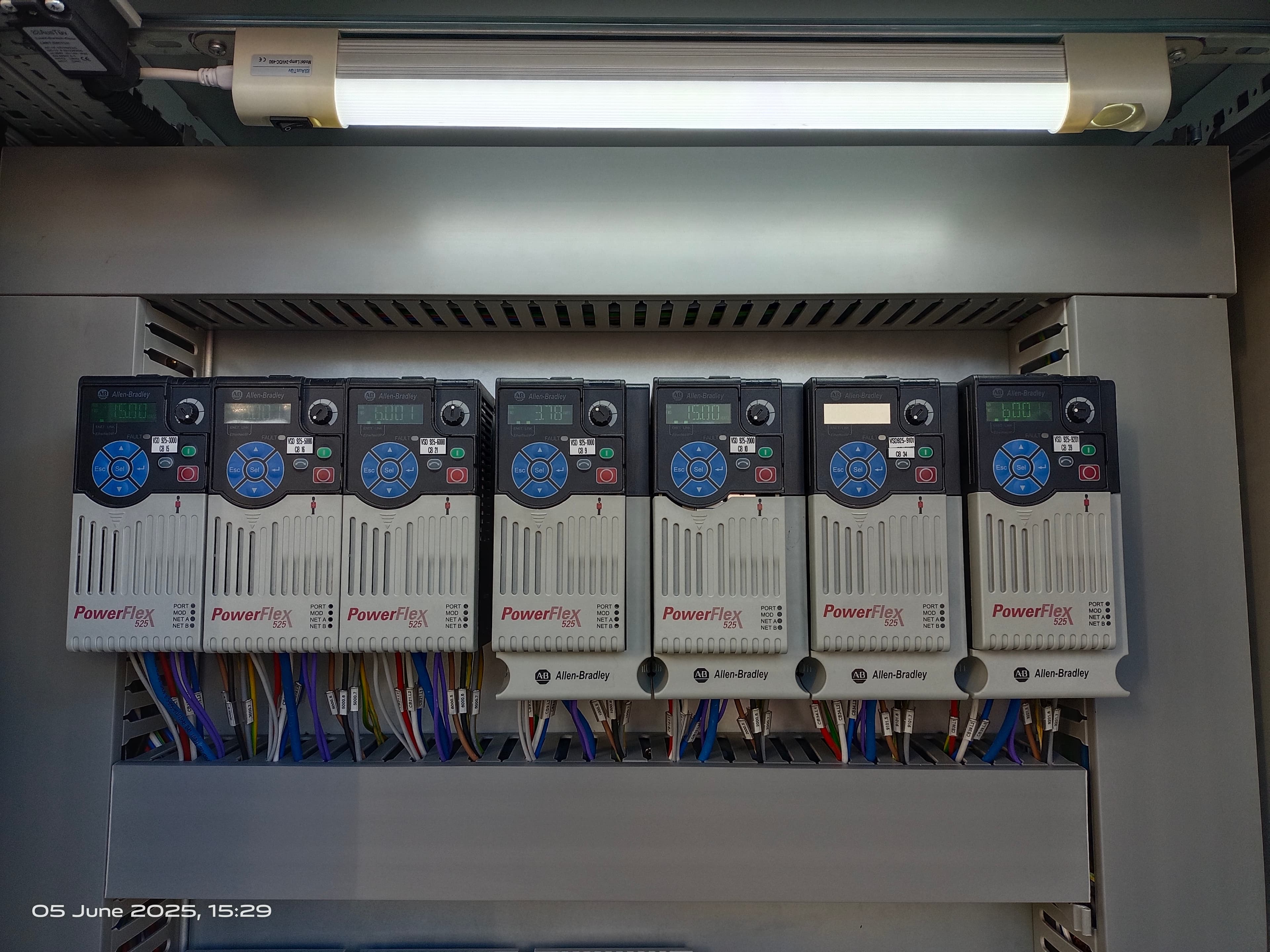
Metromotion Controls connects PLC and SCADA events to your CMMS, so faults raise work orders on their own, condition data gives early warning before a stop, and runtime and cycle counts from the line can drive preventive maintenance intervals.
In most plants the control system knows about a fault long before the maintenance system does, and preventive maintenance runs on calendar dates that ignore how hard each machine actually worked. Integration closes both gaps. Fault events and condition alarms from the PLC and SCADA layer raise work orders in the CMMS, and the run hours and cycle counts the PLC already keeps can drive preventive intervals. We have delivered event-triggered work orders with the MEX CMMS on Ignition at Remedy Drinks, and we design each integration around the CMMS a site already uses.
The PLC already knows when an asset faults and which fault it was. Passing that to the CMMS turns a maintenance request from a phone call or a note into a record created at the moment of the fault, against the right asset, with the fault code attached. At Remedy Drinks, plant events from Ignition create work orders in MEX automatically, which reduced the gap between a fault occurring and a work order being raised and assigned.
Some failures announce themselves. Vibration, temperature and motor current change for days or weeks before a bearing or gearbox fails. On the Remedy Drinks can filler, vibration and condition data is collected over MQTT, trended in Ignition and alarmed against thresholds aligned to maintenance inspection intervals, giving the maintenance team early warning of developing faults. The same alerts can raise an inspection work order in the CMMS.
Calendar-based preventive maintenance services a machine that barely ran as often as one that ran every shift. The PLC already counts run hours, cycles, starts and strokes. Those counts can drive preventive maintenance intervals in the CMMS, so a filler valve set is serviced after a set number of cycles and a gearbox after a set number of run hours. We design the counters, the thresholds and the handover to the CMMS with the maintenance planner, and prove them on a few critical assets before extending them.
The integration is only as good as the rules behind it. A fault that trips forty times in a shift should raise one work order, not forty, and a stop the operator clears in seconds may not warrant one at all. We run a short working session with the maintenance planner and production lead to agree which events create work, at what priority, against which asset, and who closes it. The PLC asset names are mapped to the CMMS asset register so every job lands on the right equipment.
Events are detected in the SCADA layer, where they already have context, and passed to the CMMS through its documented API or a controlled database interface. Nothing outside the OT network writes to a PLC, and the business system never gets a direct path into the control layer. Messages are queued and retried, so a network drop or CMMS outage delays a work order instead of losing it. Every message is logged, so maintenance can see exactly what the plant sent and when.
We delivered the Remedy Drinks integration with MEX. The same event pattern applies to SAP Plant Maintenance (SAP PM) and other CMMS and ERP maintenance modules that offer a documented API or interface: a plant event or a meter reading becomes a notification, work order or measurement document against the right functional location. We check that interface at the start of a project, because it sets what the integration can do and how it should be secured.
We have delivered integration with MEX on Ignition at Remedy Drinks. SAP PM and other CMMS and ERP maintenance modules can be connected with the same event pattern where they offer a documented API or interface, which we assess at the start of a project.
No. We agree rules with maintenance so only meaningful events create work, repeated trips of the same fault create one job, and minor stops are logged without raising a request.
Yes. The PLC already keeps these counts. They can be passed to the CMMS as meter readings or used to raise the preventive job when an agreed threshold is reached. We start with a few critical assets and extend once the thresholds are proven.
No. Events are passed outbound from the SCADA layer through a controlled interface. The CMMS never has a direct path into the control network, and nothing outside the OT network writes to a PLC.
Messages are queued and retried, so the work order is delayed rather than lost, and every message is logged.
OEE, reports, quality, CIP, maintenance and energy data from the team that builds and programs the lines.
Live OEE, line status and stop reasons read directly from the PLCs on food and beverage lines.
Orders down to the line and counts, consumption, scrap and batch results back to ERPs such as SAP and Pronto Xi.
Runtime hours, cycle counts and condition data as the basis for maintenance intervals.
Condition monitoring to ISO 17359 and ISO 13374, the P-F curve, MQTT and OPC UA data acquisition, and how condition data ties into OEE.
Ignition to MEX integration generating automatic work orders from plant events for a beverage producer.
MQTT-based vibration and condition monitoring with threshold alerting on a production-critical can filling line.
Certificate-secured MQTT connectivity for condition monitoring at a brickworks, delivered as a documented reference implementation.
Ignition Gold Certified System Integrator for Ignition SCADA, historian, reporting and MES functions.
PLC and SCADA fault finding, planned maintenance and production breakdown support for Melbourne and regional sites.
Automation, traceability, CIP, SCADA and production data for Australian food and beverage plants.
The unified namespace, MQTT and Sparkplug, OPC UA, historian contextualisation and ISA-95 alignment for a single source of plant truth.
Remedy Drinks is one of Australia's fastest-growing beverage producers, known for its kombucha and low-sugar drink range. As production volumes grew, the maintenance team needed a tighter connection between the plant floor and their MEX CMMS system. Metromotion Controls designed and delivered the integration between the Ignition SCADA platform and MEX, enabling automatic work order creation from plant events and giving the maintenance team structured visibility of asset status without manual data re-entry.
The can filling line at Remedy Drinks is a production-critical asset. Unplanned downtime on the filler directly affects output and shelf availability. Metromotion Controls was engaged to implement a condition monitoring solution that captured vibration and operational data from the can filler, providing the maintenance team with early indicators of developing faults. The solution used an MQTT-based data collection architecture to feed condition data into Ignition, where it was trended and threshold-monitored alongside production events.
Heavy-industry plants such as brickworks run continuous processes in heat and dust, so condition data has to be collected securely and without disturbing production control. Austral Bricks is one of Australia's largest brick manufacturers, operating multiple production sites across the country. At their Wollert facility, the team wanted to evaluate MQTT as a modern connectivity protocol for extracting machine data and enabling condition monitoring at scale. Metromotion Controls designed and delivered a structured MQTT trial, establishing secure certificate-based connectivity, documenting the architecture, and providing a completed implementation the site team could validate and extend. The project gave Austral Bricks a working reference implementation for MQTT-based data collection on industrial equipment.
Factory data, OEE, reports, quality, CIP, maintenance and energy from the team that builds and programs the lines.
Live OEE, line status and stop reasons read directly from the PLCs, shown to operators, supervisors and managers when each of them needs it.
Production orders and recipes down to the line, and counts, consumption, scrap and batch results back to ERP, on an ISA-95 model with clear transaction rules.
Ignition SCADA, historian, reporting and MES functions designed, built and supported by an Ignition Gold Certified System Integrator in Melbourne.
Speak directly with an engineer about scope, timing and technical constraints.