Platforms and vendors
- Rockwell
- FactoryTalk View
- Ignition
- Siemens
- SQL databases
- ISA-88 batch control
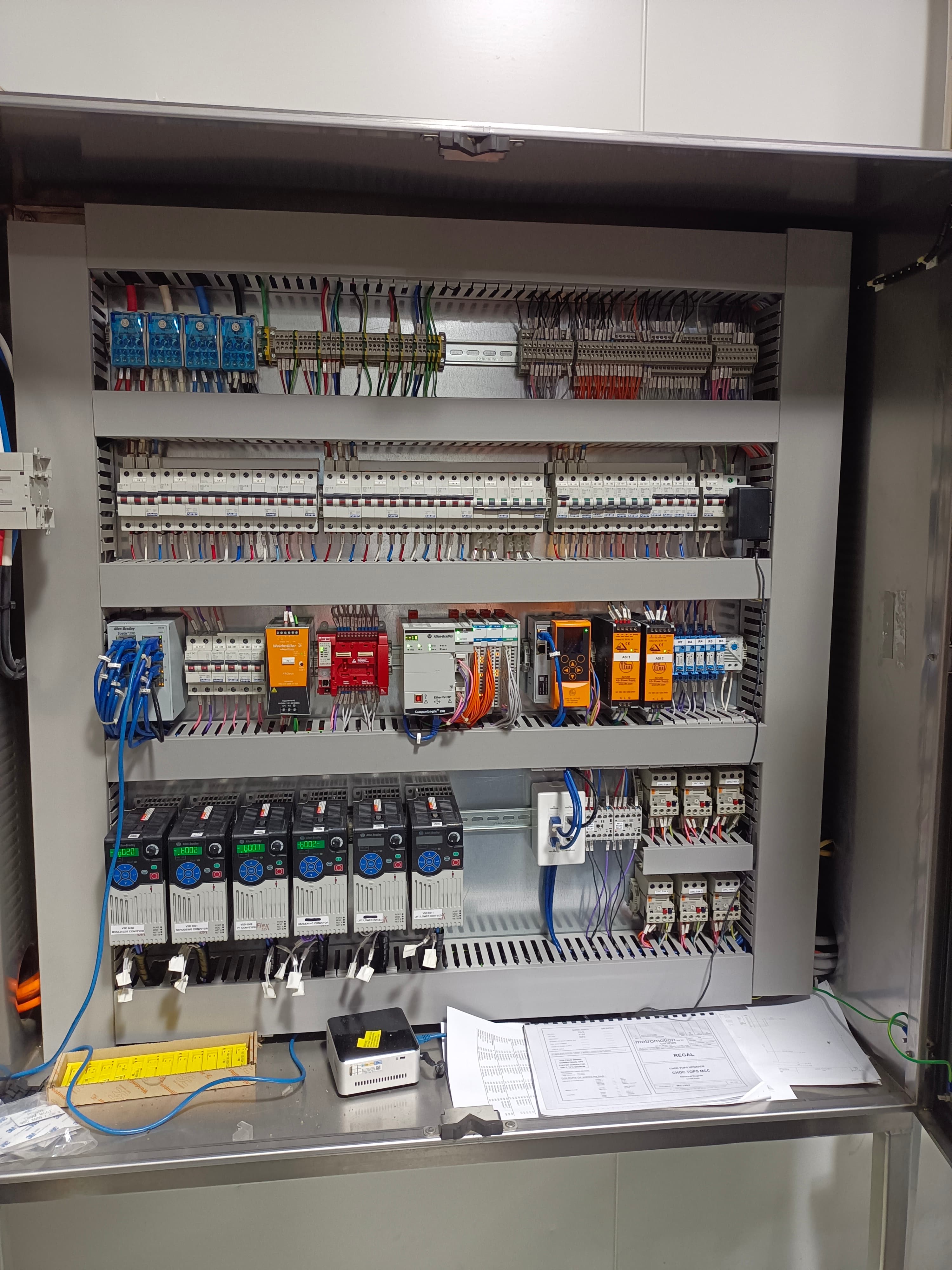
Metromotion Controls structures recipes and set-points in the PLC and SCADA layer, so the right parameters load with the product at changeover, changes are controlled, and every batch or run records the recipe it used.
A recipe is the set of parameters that turns a line into a product: temperatures, times, speeds, weights and sequences. In many plants those parameters are hard-coded in PLC logic, typed in at the HMI, or kept on a laminated sheet beside the panel. Each new product then needs a programmer, and nobody can say for certain which settings a given batch ran with. Metromotion Controls moves recipes into a structured, controlled place in the control system, so products can be added without reprogramming and every run carries its recipe with it.
Recipe problems usually show up as slow product changes and arguments about what a batch actually ran with.
The core of good recipe management is keeping product data out of the control logic. The PLC runs a sequence that is the same for every product; the recipe supplies the parameters. For batch processes we structure this to ISA-88, with recipes made of phases that call equipment capabilities, so a new product is a new recipe rather than new code. For continuous and packaging lines the same idea applies with a simpler parameter set per SKU.
Recipes can live in the PLC, the HMI or SCADA, or a SQL database, and the right place depends on how many there are and who changes them. We choose with the site, keeping the PLC able to run the current recipe if the network drops.
Once recipes are structured data, changes can be controlled. Edits go through a defined role, each change is versioned with who made it and when, and operators can only adjust parameters within limits. Every batch or run then records the recipe and version it used, along with any adjustments made during the run. That record links directly to quality data, traceability and the production order.
A PLC or SCADA migration is the cheapest time to fix recipe handling, because the logic is being reviewed anyway. At Bulla the churn recipe system was extended and realigned with how the plant runs, within the same one-week shutdown as the SLC 500 to CompactLogix upgrade. For a migration with hard-coded recipes, the batch control and ISA-88 guide covers how to separate them.
Not always. Many lines manage recipes well in the PLC and HMI or SCADA. Dedicated batch software earns its place when there are many recipes, shared equipment and complex phase sequences, as in larger ISA-88 batch plants.
Recipes can be edited at any time and are loaded at the next changeover or batch start. Changes to the running recipe are limited to defined parameters within approved limits, and each change is recorded.
The recipe identifier usually comes with the production order from ERP, and the detailed parameters stay in the control system or a plant-side database where engineers and quality staff manage them.
Yes. We read the existing PLC code, separate the product parameters from the sequence, and move them into a structured recipe system. It fits well alongside a PLC or SCADA upgrade.
OEE, reports, quality, CIP, maintenance and energy data from the team that builds and programs the lines.
Orders released to the line with SKU, quantity and recipe, tracked live and confirmed back with actual output and scrap.
Checkweigher, metal detector, batch and lab data with lot genealogy, from the systems that run the line.
The MES functions a mid-size food plant uses, what it can skip, and whether to build on Ignition or buy enterprise MES.
A practical guide to ISA-88 batch control covering the procedural model, equipment mapping and traceability.
SLC 500 end-of-life upgrade to CompactLogix PLCs, I/O and HMIs for two ice cream churns, completed in a one-week shutdown.
OEM machine automation with recipe-based HMI design and workshop and on-site commissioning.
Pet food raw materials automation covering batching, handling and production control requirements.
Ignition Gold Certified System Integrator for Ignition SCADA, historian, reporting and MES functions.
Modernise legacy PLC, SCADA, HMI and control infrastructure with staged cutover planning.
Automation, traceability, CIP, SCADA and production data for Australian food and beverage plants.
Controls for yoghurt and cheese plants, milk receival, pasteurisation, CIP and production reporting.
Bulla's ice cream churns ran on Allen-Bradley SLC 500 PLCs and I/O that were approaching obsolescence, with spares getting harder to source. The churns are central to production, so a controller failure would have meant an unplanned stop on a core line rather than a peripheral inconvenience. Bulla chose to upgrade before that happened, replacing the SLC 500 controls on two churns with CompactLogix PLCs, I/O and new HMIs. Metromotion Controls delivered the SLC 500 upgrade as a hybrid migration: existing control logic was ported across rather than rewritten from scratch to keep the project cost-effective, then simplified and commented so the code would be easier to navigate and maintain going forward. The two churns are functionally identical but differ in some internal detail, so each line was engineered separately rather than treated as a single duplicate job. The upgrade also extended to the recipe management system, increasing the number of recipes it could store and bringing its logic in line with how the plant actually runs the churns day to day. The full migration, cutover and commissioning were completed within a single one-week shutdown window.
JC Smale needed automation delivery to keep pace with mechanical development on a brick texturing machine. The machine design was still evolving while the controls were being written, so the control logic and HMI had to move with a moving target rather than a fixed specification. Metromotion Controls worked with the engineering team and structured the HMI around recipe-based operation, holding the texturing parameters as selectable recipes so a stored set could be recalled and applied to the texturing sequence without reprogramming. The team built the HMI for recipe-based operation and supported commissioning in the workshop and at the end-customer site.
Real Pet Food Company needed automated raw materials handling with stronger batch traceability and scheduling, across a plant where mechanical, electrical and automation scope all had to be brought together by one team before startup. Metromotion Controls structured the batch control to ISA-88, breaking each product into recipe phases and validating the transfer route and ingredient at each step so material moved against a confirmed path rather than an assumed one. The team supplied, installed and commissioned the system, coordinating mechanical, electrical and automation scope through simulation, FAT and startup.
Factory data, OEE, reports, quality, CIP, maintenance and energy from the team that builds and programs the lines.
Orders released to the line with SKU, quantity and recipe, tracked live by line, and confirmed back with actual output, consumption and scrap.
Checkweigher, metal detector, inline and batch data captured per batch and SKU, joined to lab results and lot genealogy so a trace runs as a query rather than a paper hunt.
A practical MES scope for mid-size food plants: the functions that earn their keep, the ones you can defer, and whether to build on Ignition and SQL or buy an enterprise MES.
Speak directly with an engineer about scope, timing and technical constraints.